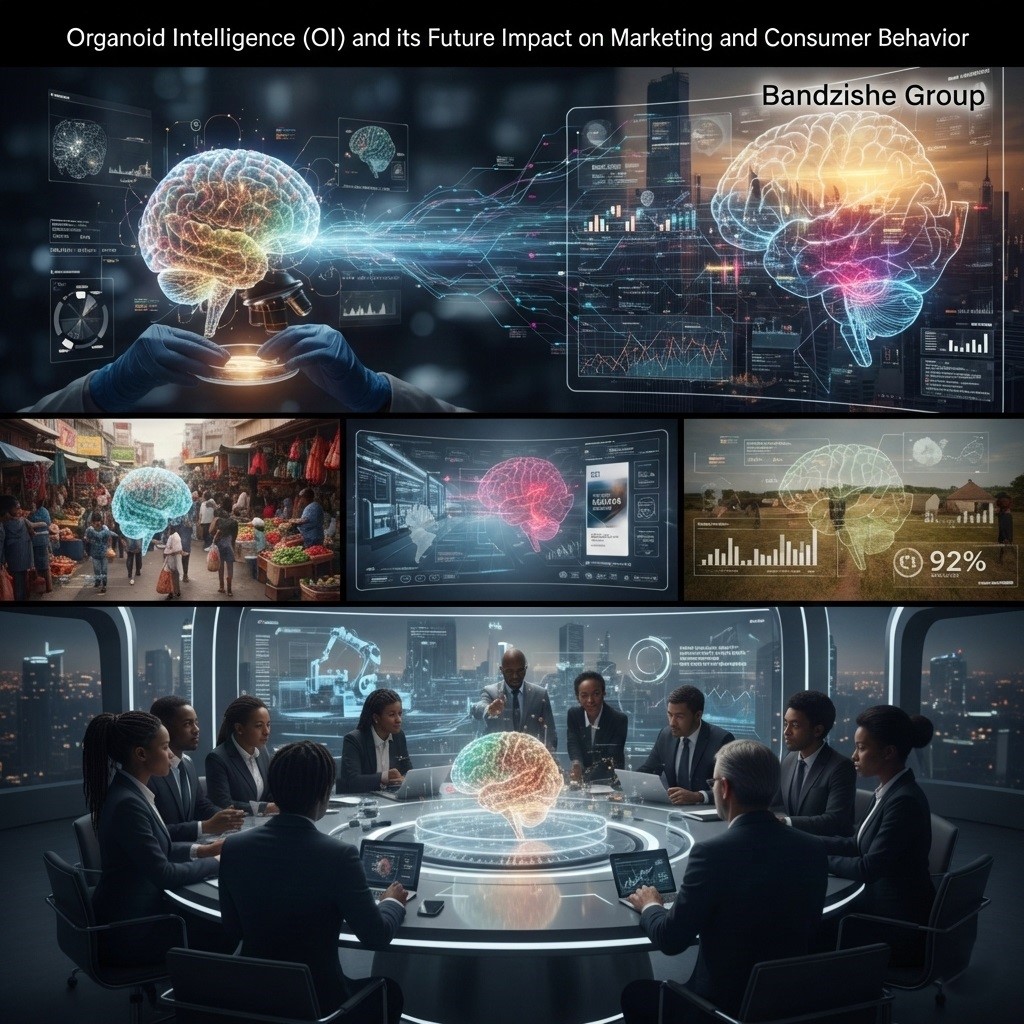

One of my many qualifications and academic foundations is a formal diploma in consumer psychology, a discipline I have pursued not as an academic ornament but as a strategic instrument, enabling me to penetrate the labyrinthine intricacies of the consumer mind. I have long pursued this discipline with the deliberate intent to penetrate the deep architecture of human choice rather than skim the surface of transactional behaviour. My professional practice demands relentless inquiry into the architecture of decision-making, compelling me to study the consumer not at the superficial level of transactions, but at the profound level of cognition, where desire is formed, loyalty is nurtured, and aversion is crystallised. Each week, I interrogate the shifting contours of perception and preference, recognising that commerce is not merely an exchange of goods, but a theatre of thought. This intellectual pursuit has, with inexorable force, drawn me towards the emergent domain of Organoid Intelligence, a field that promises to reconfigure the very foundations of marketing by harnessing living biological systems as engines of computation.
Here, in this nascent domain where biological cognition converges with computational science, I recognise the most consequential leap in the study of consumer behaviour since the advent of behavioural economics, a leap that will reshape the methods, assumptions, and competitive doctrines of global marketing for a generation.
It is impossible to elude the conviction that there are moments in the history of commerce when the familiar scaffolding of strategic thought collapses in an instant, replaced by something so radically new that even the most seasoned leaders feel the ground shifting beneath their feet. Organoid Intelligence is such a moment. Few executives have begun to grasp its significance, although the implications are profound. Organoid Intelligence is the convergence of living neural tissue, computational science, cognitive modelling, and next-generation data interpretation. It is poised to transform the entire architecture of marketing and consumer strategy. The magnitude is such that it challenges what we believe about human decision-making itself.
If artificial intelligence redefined the speed and scale of cognition, Organoid Intelligence challenges the very substrate of cognition. Is any boardroom truly prepared for a world in which consumer understanding is driven by biological intelligence cultivated in vitro rather than by digital simulations? This is not speculative fiction. It is an emerging scientific reality that will redefine competitive advantage. South African companies that recognise this early will leapfrog entire global cohorts. Those that do not will become case studies in strategic myopia.
Organoid Intelligence Defined: Biological Computation as Strategic Capital
Organoid Intelligence refers to the use of brain organoids, cultivated from stem cells, as computational entities. Unlike traditional artificial intelligence, which relies on silicon-based architectures, organoids embody the biological substrate of cognition itself. They are capable of forming synaptic connections, processing stimuli, and adapting in ways that mimic human learning. The implications for marketing are profound. Imagine consumer behaviour models not merely extrapolated from historical data, but dynamically simulated through living systems that replicate human cognitive responses. The capacity to anticipate desire, to predict loyalty, and to understand aversion at a cellular level introduces a new paradigm of precision.
Why The New Cognitive Frontier Matters to Marketing: Biological Computation Meets Commercial Strategy
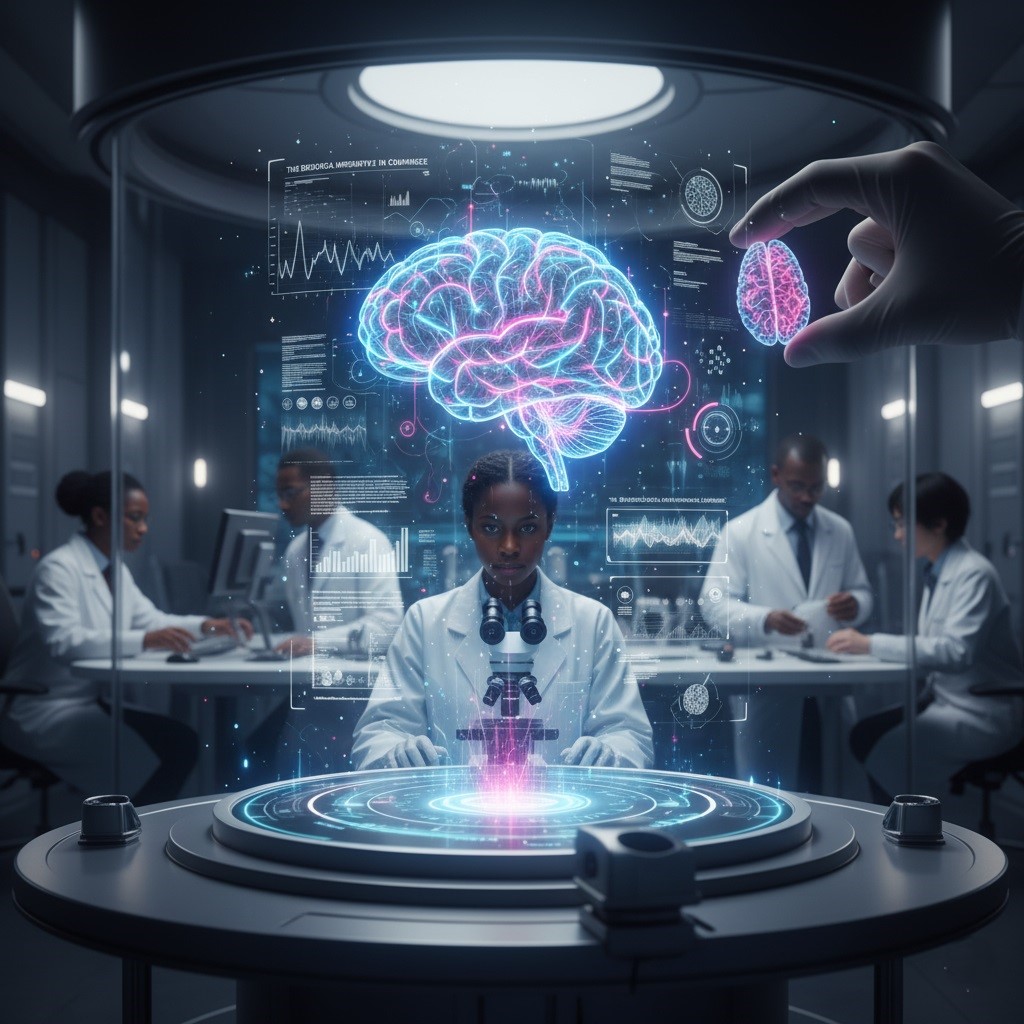
Why does this matter to marketing? Because every model of consumer behaviour is ultimately a model of cognition. For decades, marketers have tried to approximate human decision-making using digital inputs and historical data. Yet consumers do not think in linear sequences or in neat variables. They think in associative waves, emotional states, embedded memories, and unconscious heuristics. The possibility of using biological substrates to simulate or interrogate these mechanisms marks a watershed moment. It introduces a new category of insight that is neither digital nor psychological, but biological. This forces an uncomfortable question.
Are current global marketing strategies still fit for purpose when the next frontier of consumer understanding will be harvested from living cognitive systems? The answer, viewed through the lens of long-range strategy, is unequivocal. They are not.
The Biological Imperative in Commerce: Deciphering the Neuronal Ledger
The enduring failure of Big Data to achieve perfect predictive capability stems from its inability to transcend the behavioural symptom and access the biological cause; it is the study of shadows cast by an unseen object. Organoid Intelligence represents a paradigm shift, moving the analytical focus from the aggregated and often misleading external manifestation of choice to the internal, complex neurobiological architecture from which all desire emanates. These three-dimensional, self-organising cellular structures, derived from human pluripotent stem cells and exhibiting complex neuronal activity, are, in essence, miniature models of the human brain, and their computational capacity, termed OI, promises an understanding of decision-making at a sub-atomic, sub-cognitive level.
The philosophical and commercial provocation inherent here is absolute: can we, by observing the response of synthetic biological intelligence to simulated market stimuli, bypass the inherent deception and noise of traditional survey methods and online tracking? The answer is an emphatic affirmative, providing a level of predictive power that transforms marketing from a speculative art into a deterministic science, rendering competitive advantage virtually unassailable for those who command this intellectual terrain.
Marketing Reimagined: From Data Analytics to Cognitive Simulation

Why should marketing executives care about organoids? Because the current paradigm of consumer analytics is fundamentally retrospective. Algorithms analyse past behaviour to predict future action. Organoid Intelligence, by contrast, offers prospective cognition. It allows marketers to simulate consumer decision-making in real time, to test stimuli against living neural networks, and to refine strategies with unprecedented accuracy. Consider a South African retailer seeking to understand the emotional resonance of a new advertising campaign. Instead of relying solely on surveys or digital metrics, the campaign could be tested against organoid systems trained to reflect demographic-specific neural responses. The result would be a predictive model of consumer sentiment that is both biologically grounded and commercially actionable.
Reframing Consumer Behaviour: From External Observation to Internal Cognition
For more than half a century, marketers have attempted to decode consumer behaviour using external signals. Surveys, focus groups, behavioural tracking, and big data analytics all attempt to observe choice from the outside. Organoid Intelligence introduces the possibility of studying choice formation from the inside.
What happens when we can simulate how consumers encode memories about brands at the level of neural architecture? What happens when we can observe how emotional stimuli modify preference formation. What happens when adaptive neural systems allow us to test how consumers would react to stimuli that do not yet exist? These questions expose a new paradigm. The future of marketing will be driven by insights derived from biological cognition rather than from historical trend analysis. This changes everything. It shifts the centre of gravity from reactive measurement to proactive cognitive modelling.
For South African executives, particularly those leading retail, banking, telecommunications, and fast-moving consumer goods, the strategic advantage is immense. The ability to understand consumers at the level of biological response will create a gulf between companies that design with cognition in mind and those that cling to conventional segmentation models.
Consumer Behaviour at The Biological Level: The Anatomy of Desire
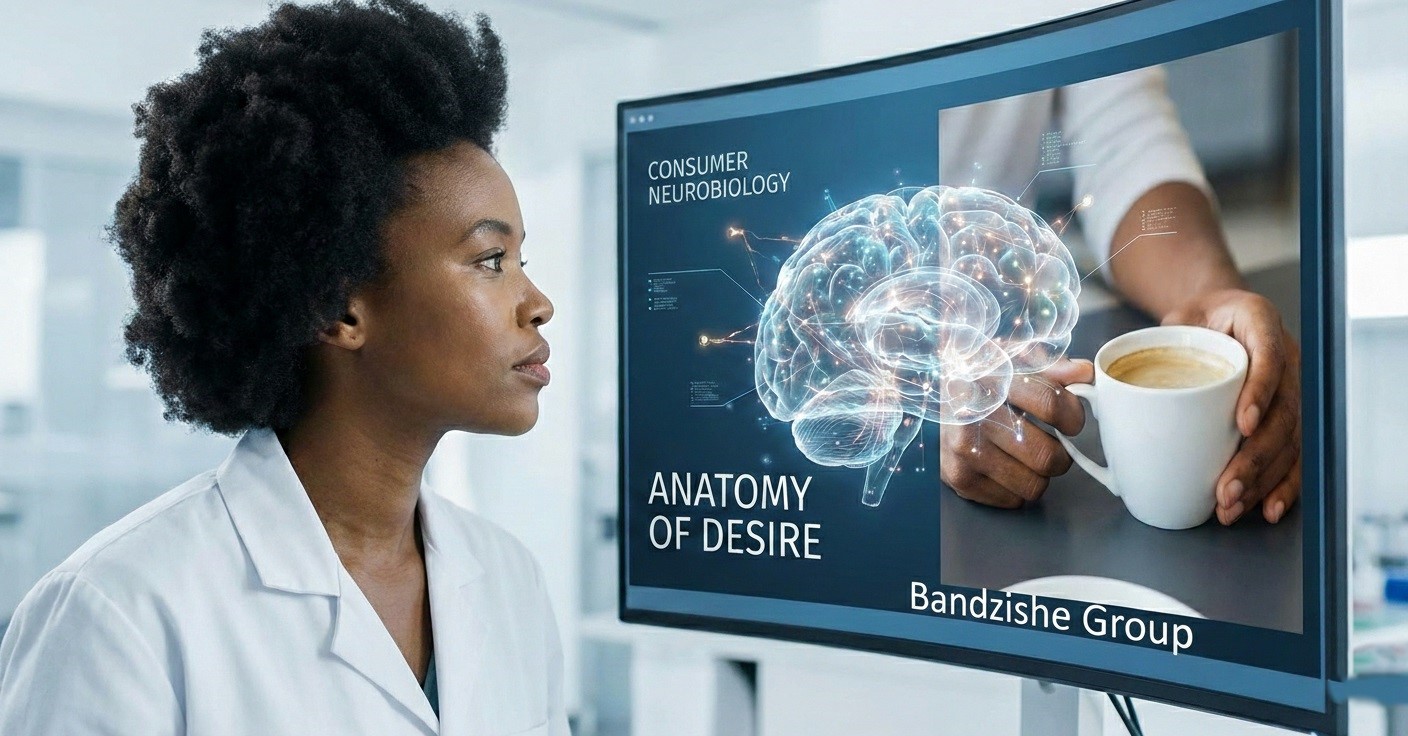
What drives consumer loyalty? What triggers aversion? What sustains trust? These questions have long been the domain of psychology and behavioural economics. Organoid Intelligence introduces a biological dimension. By observing synaptic activity in response to stimuli, marketers can identify the neural correlates of preference. This is not merely about knowing what consumers buy, but why they buy, at the level of neuronal firing patterns.
For South African companies seeking to penetrate diverse markets, from urban millennials to rural communities, such insights could prove transformative. The ability to tailor messaging to the biological architecture of decision-making represents a new frontier in inclusivity and precision.
A New Era for Predictive Intelligence: Strategic Foresight at Biological Scale
The fusion of Organoid Intelligence with advanced data ecosystems will redefine predictive modelling. Biological neural systems learn with remarkable efficiency. They generalise patterns with minimal training data. They respond dynamically to novelty. They process contradictions with organic fluidity. This is precisely what consumer markets increasingly demand. Consider the volatility of global behavioural patterns. Consumers oscillate between rational economic caution, emotional impulse, identity signalling, and information overload. Digital models struggle in such environments because they operate within rigid mathematical constraints.
Organoid systems, by contrast, adapt. They integrate complexity rather than collapse under it. This invites a provocative question. Will the next frontier of predictive marketing be shaped not by larger digital models but by smarter biological ones? The implications for competitive strategy are extraordinary. Both South African and global companies will be able to anticipate shifts in sentiment, preference cascades, and behavioural inflection points with a level of precision that outpaces market volatility itself. This is true strategic foresight.
Organoid Intelligence and the South African Consumer Psyche: A Unique Laboratory for Strategic Insight

South Africa, with its unique and multifaceted social, linguistic, and economic landscape, presents an unparalleled case study for the application and commercial deployment of Organoid Intelligence, offering a rich tapestry of diverse cognitive models that will accelerate the technology’s refinement. Consider the challenges inherent in marketing luxury goods across the stark economic disparities, or navigating the complexities of brand messaging within eleven official languages, and one immediately apprehends the limitations of conventional demographic segmentation.
Organoid Intelligence offers the capacity to model the collective neuronal response to stimuli that encode distinct cultural, socio-economic, and historical narratives, thereby predicting the non-conscious resonance of a campaign with unprecedented precision. What specific neuronal pathways are activated when a consumer in a rural Free State community encounters a brand message versus a counterpart in Sandton, Johannesburg; and how can a global corporation architect its engagement strategy to appeal to both, simultaneously achieving local relevance and global scale? OI provides the crucible for such an interrogation, enabling the development of campaigns that are biologically resonant rather than merely statistically probable, moving beyond the superficiality of race and class to the core of cognitive difference.
South African Opportunities: A National Catalyst for Cognitive Innovation
South Africa possesses a unique combination of scientific talent, entrepreneurial hunger, and market complexity. This makes it an ideal testbed for Organoid Intelligence driven marketing innovation. South African consumers are heterogeneous, emotionally expressive, culturally layered, digitally connected, and economically variable. This produces behavioural data of uncommon richness. If harnessed through Organoid Intelligence, South Africa could become a global centre for cognitive modelling.
Consider the real-world implications. A South African banking group seeking to understand household financial anxiety could use Organoid Intelligence to identify the neural markers of trust erosion and design interventions that stabilise customer confidence. A telecommunications company could simulate how consumers respond to price shocks at the level of emotional processing rather than through simplistic elasticity models. A retail group like Shoprite or Woolworths could test new formats and product lines using neural pattern recognition to anticipate subconscious engagement long before a live rollout. These are not abstractions. They are practical, commercially viable opportunities that will define regional competitiveness.
Ethical and Regulatory Imperative: Power, Responsibility, and Governance

Can corporations ethically harness living systems for profit? The question is unavoidable. Organoid Intelligence raises profound ethical dilemmas, from the status of organoids as semi-sentient entities to the implications of manipulating biological cognition for commercial gain. For South African firms, the challenge will be to balance innovation with responsibility. Regulatory frameworks must evolve to ensure transparency, consent, and accountability. Yet, those who master this balance will command a strategic advantage. The ability to deploy organoid systems responsibly will become a hallmark of corporate leadership, distinguishing visionary firms from opportunistic imitators.
With immense power comes an equally immense responsibility, and the deployment of Organoid Intelligence, particularly within an emerging market like South Africa, raises profound ethical and regulatory quandaries that must be addressed ab initio. The capacity to understand and predict consumer behaviour at the level of the synapse inevitably introduces the possibility of biological manipulation, a form of subliminal persuasion so potent it verges on coercion. Where, precisely, is the demarcation line between highly effective marketing and neuronal puppetry, and who, precisely, shall possess the authority to police the interface between synthetic biology and commercial compulsion? The answer is that only a global coalition of policy shapers, guided by rigorous, academically informed principles, can construct the necessary ethical firewall.
South Africa, with its globally respected Constitutional Court and its history of confronting complex moral dilemmas, is uniquely positioned to take a leadership role in shaping this new regulatory landscape, providing a blueprint for the world that balances commercial innovation with human autonomy. To delay this philosophical deliberation is to invite a biologically engineered marketplace where free will is merely a statistical anomaly.
Case Studies: Global Precedents and South African Potential
Pioneering Organoid Computing Experiments: Globally, research institutions such as Johns Hopkins University and the University of California are pioneering organoid computing experiments. These laboratories have demonstrated that organoids can perform rudimentary tasks, such as pattern recognition, with efficiency surpassing certain machine-learning models. Translating this into commerce, multinational corporations are already exploring partnerships with biotech firms to harness organoid systems for product testing and consumer insight.
The Frontier Experiment in the United States and Europe: Several research institutions in the United States and Europe are already experimenting with organoid-based cognitive modelling. One laboratory has trained neural organoids to play basic digital games using real-time learning signals. Another has demonstrated the potential for organoids to perform pattern recognition tasks with striking efficiency. These studies reveal an important truth. Biological computation is not theoretical. It is operational. If such systems can learn game behaviours with limited training, why would they not learn patterns of consumer attention? If they can recognise environmental signals, why would they not recognise brand stimuli? If they can optimise their responses over time, why would they not optimise pathways that mirror consumer decision mechanisms? The next wave of global marketing research will therefore be biological. Leaders who ignore this shift will find themselves operating with intellectual tools that are no longer capable of describing the markets they seek to influence.
South Africa Potential: In South Africa, the potential is equally compelling. The country’s burgeoning biotechnology sector, coupled with its dynamic consumer markets, positions it as a fertile ground for early adoption. A Johannesburg-based financial services firm, for instance, could employ organoid systems to simulate risk perception among clients, thereby refining communication strategies and product design.
South African Cognitive Modelling for Retail Transformation: A major South African retailer sought guidance on understanding why certain promotional stimuli produced inconsistent engagement across consumer groups. Conventional analytics could not explain the divergence. A new approach was recommended involving emerging cognitive modelling techniques. By analysing how consumers formed emotional associations with pricing cues, narrative frames, and product displays, the retailer uncovered previously hidden behavioural triggers. The consequence was profound. Marketing campaigns were redesigned to reflect the internal logic of consumer cognition rather than external price mechanics. Engagement rose significantly. This demonstrated a simple but powerful insight. When strategy aligns with how consumers think rather than with how analysts assume they think, the entire pattern of commercial performance changes. Organoid Intelligence will magnify this dynamic exponentially.
A Narrative of Transformation: Consider a Cape Town-based technology start-up seeking to launch a new mobile application aimed at financial literacy. Traditional market research reveals limited engagement among target demographics. By partnering with a biotech laboratory, the firm tests its interface against organoid systems trained to replicate neural responses of young South Africans. The results reveal that certain colour schemes and interaction patterns trigger heightened synaptic activity associated with attention and retention. The start-up redesigns its application accordingly. Within six months, user engagement doubles, and the firm secures investment from international venture capitalists. This narrative illustrates the practical power of Organoid Intelligence: biological insight translated into commercial success.
Implementation Strategies: What South African and Global Corporations Must Do Now

How should companies prepare for the integration of Organoid Intelligence? Every organisation that aims to lead in the coming cognitive age must rethink its research architectures. The pathway involves seven stages.
1. The first strategic mandate is capability building. Companies must form strategic alliances with neuroscientists, cognitive engineers, and emerging Organoid Intelligence laboratories.
2. The second mandate is ethical design. Biological cognition introduces complex responsibilities that must be governed by transparent frameworks.
3. The third mandate is innovation readiness. Corporations must redesign their data systems to integrate cognitive models into marketing, product development, risk management, and behavioural analysis.
4. The fourth mandate is leadership education. Executives must understand the philosophical and strategic implications of Organoid Intelligence, not as a scientific curiosity but as a commercial force that will redefine markets.
5. The fifth is investment in research partnerships with universities and biotech firms to access organoid expertise.
6. The sixth is the creation of interdisciplinary teams combining neuroscientists, data analysts, and marketing strategists.
7. The seventh is the development of pilot projects that test specific applications, such as advertising resonance or product design.
In South Africa, firms could collaborate with institutions such as the University of Cape Town or Stellenbosch University, both of which possess strong biomedical research capabilities. By embedding organoid systems into marketing workflows, companies can transition from abstract speculation to tangible advantage. Without these foundations, companies will remain spectators rather than architects of the future.
Practical Implementation Examples: From Bio-Simulation to Precision Marketing and Branding
The practical implementation of Organoid Intelligence in a commercial context necessitates the establishment of sophisticated biosimulatory frameworks, a profound undertaking that demands substantial capital allocation and intellectual courage from Fortune 500 leadership. A global corporation operating in South Africa, for instance, could deploy a "Cognitive Resilience Organoid Array" to pre-test the emotional and mnemonic impact of a new product launch advertisement, observing the biological network’s stress response, valence, and long-term encoding potential before committing hundreds of millions to execution. This is not simple A/B testing; it is pre-emptive neurobiological validation.
A striking, illustrative example would be a major South African financial institution grappling with low uptake of a crucial digital banking platform; standard ethnographic studies indicate a lack of 'trust' and 'complexity aversion'. By contrast, an OI approach might reveal that the platform’s colour palette and navigational rhythm trigger a sub-cortical aversion response rooted in basic mammalian threat detection, completely unrelated to conscious 'trust' metrics. The solution is not a communications strategy, but a neuronal re-architecture of the user interface, a profound insight only accessible through biological simulation.
Furthermore, a global mining giant seeking to enhance safety compliance could use OI to model the cognitive load and attentional decay associated with new operational protocols, thereby designing training that is maximally memorable at the neuronal level, mitigating catastrophic human error through biological foresight. The commercial value proposition is unambiguous: the elimination of strategic ambiguity and the attainment of market certainty.
Global Reflections: South Africa As A Strategic Node
Why should global leaders pay attention to South Africa in this context? Because the nation embodies both opportunity and complexity. Its diverse consumer base, its growing biotechnology sector, and its strategic position within emerging markets make it a laboratory for global trends. If South African firms can pioneer the integration of Organoid Intelligence into marketing, they will not only transform local commerce but also set precedents for global practice. For CEOs and billionaires seeking to anticipate the next wave of competitive advantage, South Africa offers a vantage point from which to observe and participate in the unfolding revolution.
Embrace The Biological Truth of Commerce: The Decision That Will Define the Next Generation of Leadership
Organoid Intelligence is not a distant possibility. It is an imminent reality that will redefine marketing and consumer behaviour. For South African firms, the opportunity is to lead rather than follow, to command rather than be commanded. For global leaders, the imperative is to recognise that the future of commerce lies not merely in data, but in biology. The question is stark: will you seize this frontier, or will you allow others to dictate its terms? The answer will determine not only the trajectory of your enterprise, but the architecture of global commerce itself. The time to act is now. The leaders who embrace Organoid Intelligence will not simply participate in the future. They will own it.
The rise of Organoid Intelligence forces every leader to confront a decisive question. Will you allow the future of consumer strategy to be dictated by others, or will you seize the intellectual advantage of the coming cognitive era? The companies that lead the next decade will be those that understand consumers not at the level of transactions but at the level of cognition. This is the moment to act. Build the partnerships. Fund the research. Deploy the pilots. Shape the policy. Claim the strategic territory before your rivals realise it exists. The leaders who embrace this new frontier will not only master their markets. They will redefine them.
Images by Bandile Ndzishe of Bandzishe Group
About bandile ndzishe

Bandile Ndzishe is the CEO, Founder, and Global Consulting CMO of Bandzishe Group, a premier global consulting firm distinguished for pioneering strategic marketing innovations and driving transformative market solutions worldwide. He holds three business administration degrees: an MBA, a Bachelor of Science in Business Administration, and an Associate of Science in Business Administration.
With over 30 years of hands-on expertise in marketing strategy, Bandile is recognised as a leading authority across the trifecta of Strategic Marketing, Daily Marketing Management, and Digital Marketing. He is also recognised as a prolific growth driver and a seasoned CMO-level marketer.
Bandile has earned a strong reputation for delivering strategic marketing and management services that guarantee measurable business results. His proven ability to drive growth and consistently achieve impactful outcomes has established him as a well-respected figure in the industry.
As an AI-empowered and an AI-powered marketer, I bring two distinct strengths to the table: empowered by AI to achieve my marketing goals more effectively, whilst leveraging AI as a tool to enhance my marketing efforts to deliver the desired growth results. My professional focus resides at the nexus of artificial intelligence and strategic marketing, where I explore the profound and enduring synergy between algorithmic intelligence and market engagement.
Rather than pursuing ephemeral trends, I examine the fundamental tenets of cognitive augmentation within marketing paradigms. I analyse how AI's capacity for predictive analytics, bespoke personalisation, and autonomous optimisation precipitates a transformative evolution in consumer interaction and brand stewardship. By extension, I seek to comprehend the strategic applications of artificial intelligence in empowering human capability and fostering innovation for sustainable societal advancement.
In essence, I explore how AI augments human decision-making and strategic problem-solving in both marketing and other domains of life. This is not merely an interest in technological novelty, but a rigorous investigation into the strategic implications of AI's integration into the contemporary principles of marketing practice and its potential to reshape decision-making frameworks, rearchitect strategic problem-solving paradigms, enhance strategic foresight, and influence outcomes in diverse areas beyond the marketing sphere.