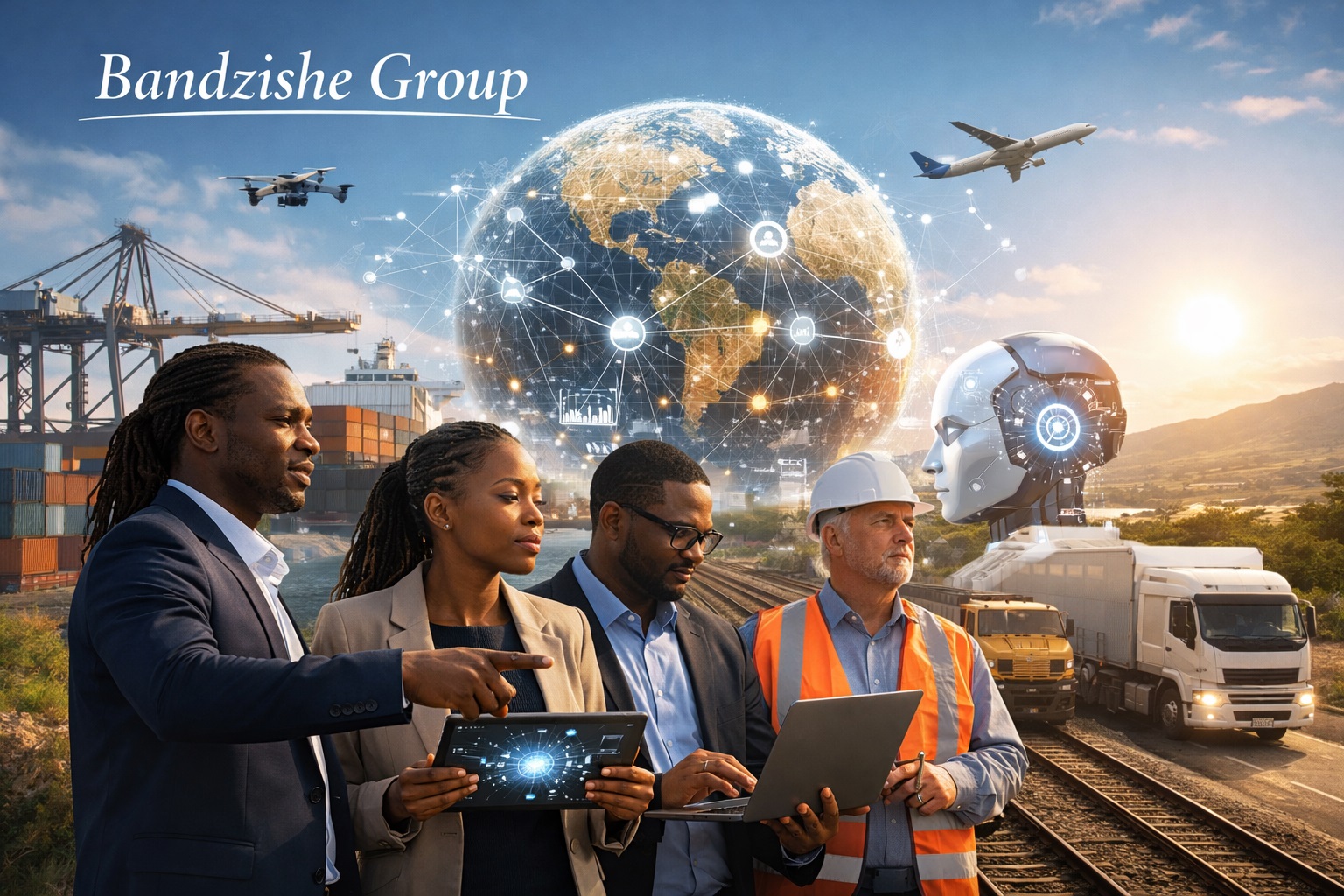

South Africa does not suffer from a shortage of entrepreneurial energy; it suffers from fragile systems that exhaust that energy before it can compound into durable growth. The most dangerous misconception shaping boardrooms and policy corridors alike is the belief that supply chain failure is episodic rather than structural. It is not. It is continuous, corrosive, and disproportionately destructive to small and medium enterprises that lack financial shock absorbers. In an economy where logistics inefficiencies, energy instability, and infrastructural decay are not anomalies but operating conditions, optimisation is an insufficient ambition. Efficiency without resilience is simply fragility at speed. Artificial intelligence enters this landscape not as a technological indulgence, but as a strategic necessity with macroeconomic consequences. The question is no longer whether South African SMEs should adopt AI. The real question is whether the economy can afford for them not to. What appears, at first glance, as a discussion about algorithms is in fact a debate about national competitiveness, employment continuity, and economic sovereignty. Those who understand this early will shape markets. Those who ignore it will inherit volatility.
For decades, supply chain discourse has been dominated by the pursuit of optimisation: faster deliveries, leaner inventories, lower costs. Yet efficiency without resilience is a brittle illusion. When pandemics, geopolitical disruptions, or cyber threats strike, efficiency collapses. AI redefines the paradigm. It does not simply optimise; it anticipates, adapts, and fortifies. It transforms supply chains from fragile conduits into intelligent ecosystems capable of absorbing shocks and converting crises into opportunities for growth.
The Fragility of Sovereignty: Efficiency Without Resilience Is the Enemy of Survival
The global supply chain is not a neutral machine awaiting lubrication; it is a contested system shaped by power, volatility, and asymmetry, where those optimised solely for efficiency are systematically exposed. For the South African small and medium enterprise, the orthodox pursuit of lean optimisation has ceased to be a virtue and has instead become a strategic liability. Practices such as just-in-time delivery were engineered for environments of assumed stability, predictable infrastructure, and geopolitical calm. None of those assumptions holds. Yet many enterprises continue to organise their operations as though disruption were an aberration rather than the governing condition. Is it not a profound strategic error to persist with models designed for equilibrium in an era defined by permanent instability?
What is commonly described as a resource crisis among South African SMEs is, in truth, a crisis of cognition. The vulnerability does not stem primarily from insufficient capital or entrepreneurial capability, but from an inherited mental model that equates efficiency with strength. In volatile systems, efficiency without resilience does not confer advantage; it accelerates failure. By stripping out buffers, redundancy, and foresight, hyper-efficient supply chains sacrifice optionality, and optionality is the currency of survival under uncertainty. Economic sovereignty, whether at the firm or national level, is eroded not by inefficiency, but by fragility masquerading as discipline.
The imperative, therefore, is not to abandon efficiency, but to subordinate it to resilience. This requires a fundamental re-engineering of how risk is perceived, measured, and acted upon. Artificial Intelligence is indispensable to this transformation, not as a productivity enhancement, but as a cognitive infrastructure. Through predictive modelling, probabilistic forecasting, and adaptive decision systems, AI enables enterprises to anticipate disruption rather than merely endure it. It allows SMEs to see around corners, to simulate stress before it manifests, and to allocate resources with strategic foresight rather than reactive desperation.
In this emerging order, passive participation is untenable. Enterprises that treat volatility as an external nuisance will be consumed by it. Those who architect intelligence into their supply chains will convert uncertainty into strategic leverage. The Southern African market will not be shaped by those who seek to restore a vanished stability, but by those who design for disorder with intent, precision, and confidence. The objective is not survival through endurance, but advantage through preparedness. We do not position ourselves to withstand the next disruption. We position ourselves to dominate in its aftermath.
Algorithmic Prescience: Transitioning From Reactive Recovery to Proactive Defiance
The fundamental flaw in contemporary logistics is the reliance on historical data to predict unprecedented chaos. How can a spreadsheet, tethered to the failures of the past, possibly navigate the cascading complexities of a broken port or a sudden currency collapse? Artificial Intelligence offers the only viable escape from this linear trap by providing what we define as algorithmic prescience. This is not merely forecasting; it is the construction of a digital twin that simulates thousands of failure points before they manifest in the physical world. By deploying machine learning models that ingest non-traditional data, such as satellite imagery of shipping lanes or social sentiment in volatile regions, SMEs can detect tremors in the supply chain weeks before their competitors.
Why should a manufacturer in Gauteng wait for a shipping delay to be announced when the AI has already diverted the cargo based on predicted congestion at the Port of Durban? This level of foresight transforms the SME from a victim of circumstance into a master of the trade winds. It is the difference between an entity that reacts to a storm and one that has already built the lighthouse. This technological leap serves as the primary credible signal of fiscal and operational sophistication.
South African Supply Chains as Economic Stress Tests: Constraint as Context
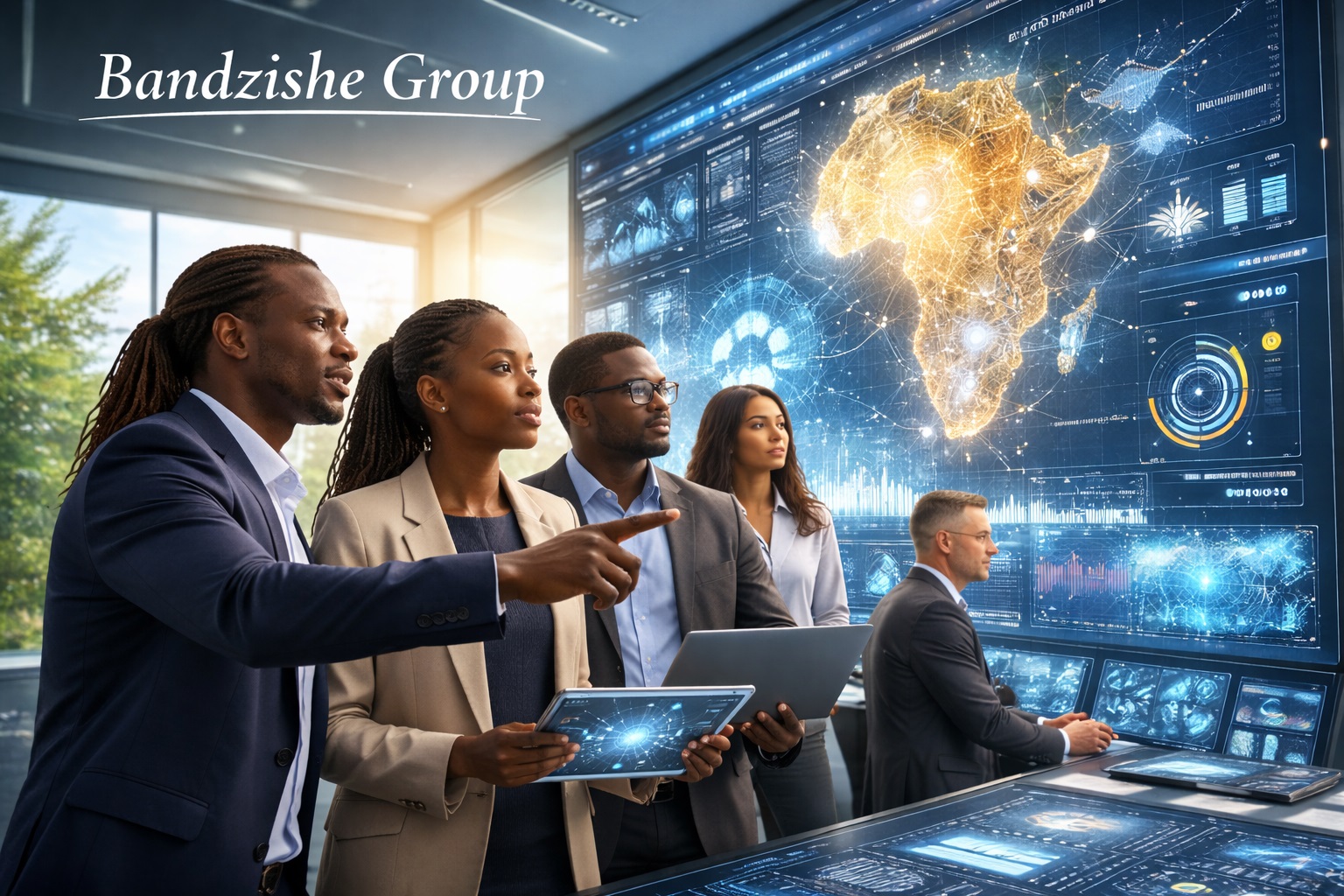
Every economy reveals its character under stress. South Africa has been under stress for over a decade. Supply chains here function as continuous stress tests, exposing weaknesses in coordination, governance, and infrastructure. SMEs sit at the sharp end of this reality. They are expected to meet delivery commitments, comply with standards, and remain price competitive while absorbing shocks they did not create. AI offers a way to rebalance this asymmetry. By increasing visibility across fragmented networks, SMEs can regain strategic agency. Advanced forecasting tools allow small firms to anticipate demand volatility rather than react to it. Machine learning models can identify early warning signals in supplier behaviour, transport delays, or energy availability patterns. This intelligence enables pre-emptive action. It is precisely this capacity for anticipation that defines resilient systems.
Consider a mid-sized food processing enterprise supplying urban retailers from peri-urban production hubs. Historically, load shedding and transport delays would result in spoilage, missed deliveries, and punitive penalties. By deploying AI-driven production scheduling aligned with energy availability forecasts and logistics risk models, such a firm can sequence output to protect margins and reliability simultaneously. This is not a marginal improvement. It is a structural upgrade. At scale, these upgrades accumulate into national productivity gains. The implication is clear. When SMEs become resilient, supply chains stabilise. When supply chains stabilise, economies breathe.
The South African Reality: Formidable Barriers to AI Adoption
South African SMEs face formidable barriers to AI adoption: limited access to capital, insufficient digital literacy, shortages of digital skills, inadequate infrastructure and insufficient awareness of AI’s potential. Yet herein lies the opportunity. Corporate enterprise and supplier development funding, if reimagined as a lever for technological empowerment rather than a compliance obligation, could bridge this divide and catalyse adoption. Public–private partnerships, strategically designed, could democratise access to AI tools. The dividends would be immense. By embedding AI into the operational DNA of SMEs, South Africa could unlock productivity gains, stabilise production, stimulate innovation, enhance competitiveness, and catalyse and accelerate job creation at scale.
The Architecture of Autonomy: Dismantling Complexity Through Intelligent Decentralisation
Complexity is a predator that feeds on centralisation, and South African SMEs have long been its preferred prey. When a single point of failure can decapitate an entire production line, the traditional hierarchical supply model becomes a liability of the highest order. AI enables a radical decentralisation, allowing for autonomous sourcing agents that can renegotiate contracts in real time as local conditions shift. Imagine an intelligent system that automatically identifies and onboards a secondary component supplier in the Eastern Cape, the moment a primary shipment from Shenzhen is flagged for a three-week delay. Is it not time we demanded that our technology do the heavy lifting of strategic pivot, rather than leaving it to the exhausted faculties of human management? This is the imaginative force of creativity applied to the cold logic of the ledger. By automating the mundane complexities of procurement, we liberate the human intellect to focus on high-level relationship building and brand expansion. The result is a supply chain that is not just a line on a map, but a living, breathing, and self-healing organism. We are replacing the rigid iron chains of the past with a fluid, intelligent web of commerce.
AI as Economic Infrastructure: Reframing Technology as Development Capital
The most consequential mistake leaders make is treating AI as a tool rather than as infrastructure. Infrastructure shapes behaviour. It defines what is possible. In the twentieth century, roads, ports, and electricity grids determined industrial geography. In the twenty first, intelligent systems determine competitive geography. For South African SMEs, AI is not about replicating the sophistication of global conglomerates. It is about compensating for environmental constraints with cognitive leverage. AI systems act as force multipliers, allowing small teams to manage complexity previously reserved for large enterprises.
This reframing has direct implications for economic development. When SMEs gain resilience, employment becomes less volatile. Township-based enterprises integrated into resilient supply networks can plan with confidence. Financial institutions gain improved risk visibility, enabling more rational credit allocation. Policymakers gain data-driven insight into systemic bottlenecks. AI thus becomes connective tissue across the economy. A manufacturing SME using predictive maintenance models reduces downtime. A logistics SME using route optimisation reduces fuel exposure. A retail SME using demand forecasting reduces working capital strain. Each improvement compounds. The aggregate effect is macroeconomic stabilisation driven from the bottom up.
From Conversation to Strategy: What Leaders Are Quietly Admitting
In private conversations with executives, entrepreneurs, and operators across sectors, a consistent admission emerges. The old playbook no longer works. Leaders recognise that resilience cannot be outsourced or insured away. It must be designed. AI provides the design language. One logistics executive recently noted that visibility, not cost, is now the scarcest asset. Without real-time insight, decisions are guesses. Another manufacturing founder described AI as a way to sleep at night, because uncertainty becomes quantifiable rather than existential. These are not emotional statements. They are strategic acknowledgements of a paradigm shift.
What distinguishes leading SMEs is not capital intensity, but decision quality under pressure. AI improves decision quality by integrating disparate data streams into coherent foresight. It allows leaders to act before disruption manifests. This proactive posture is the hallmark of strategic maturity. It also aligns with a deeper leadership ethic. The refusal to accept fragility as inevitable. The insistence on agency even within constraint. These traits define enterprises that endure.
Provocative Question: Can SMEs Survive Without AI?

Can a South African SME, reliant on fragile supply chains, survive the next global disruption without AI? The answer is unequivocal: survival without AI is improbable. Resilience requires foresight, and foresight requires intelligence at scale. AI provides that intelligence, enabling SMEs to detect risks before they metastasise, to reconfigure supply networks dynamically, and to secure continuity in the face of uncertainty.
AI is no longer a competitive differentiator; it is a condition of participation in modern commerce. Without algorithmic sensing, predictive modelling, and autonomous decision support, SMEs are condemned to operate with delayed information in real-time markets. In such an environment, risk is not merely mispriced; it is invisible until it becomes fatal. To operate without AI is to accept strategic blindness as a business model, and blindness has never been a durable path to endurance.
Provocative Questions for Leaders: Why Is Digital Exclusion Still Tolerated?
1. What is the cost of complacency when the next global disruption strikes?
2. Can a nation claim economic sovereignty if its SMEs remain digitally impoverished?
3. Should resilience be treated as optional when fragility threatens national stability?
The answers are unambiguous. Delay is perilous. Digital exclusion is intolerable. Resilience is mandatory.
Global and South African Case Studies in Algorithmic Resilience: Practical Tactical Implementation and Transformation in Action
Globally, SMEs embedded in volatile regions offer instructive parallels. In India, small manufacturing exporters have deployed AI-driven supplier diversification models to reduce dependence on single vendors, improving delivery reliability despite infrastructure constraints. In Brazil, agribusiness SMEs use predictive climate analytics to align production and logistics with weather volatility, protecting both yield and cash flow. These examples are not about technological excess. They are about strategic adaptation. In Germany, a high-tech component distributor utilised AI to map their Tier 2 and Tier 3 suppliers, discovering a hidden dependency on a single neon gas refinery in a conflict zone. They used this insight to diversify their portfolio long before the market price for neon spiked by 600%.
Likewise, in South Africa, similar transformations are emerging. Consider the transformation of a prominent South African textile manufacturer, burdened by the erratic delivery of raw dyes and fabrics from international markets. Historically, this firm operated on a reactive basis, suffering devastating losses during the 2021 civil unrest and subsequent logistics bottlenecks. By implementing a bespoke AI platform, they transitioned to a multi-echelon inventory optimisation strategy that recalibrated stock levels across five regional hubs based on real-time risk scores. This system did not just manage inventory; it predicted a potential rail strike and proactively shifted 40% of their transit to private road freight four days before the strike was even formalised. Such a move saved the company R12 million in potential late penalties and lost contracts. A Gauteng-based apparel manufacturer implemented AI-enabled demand forecasting integrated with local transport risk data. The result was a measurable reduction in late deliveries and a stabilisation of employment during peak volatility periods. A Western Cape agriprocessor used machine learning to anticipate port congestion and reroute shipments proactively, preserving export contracts.
These are not pilot projects. They are operational systems delivering economic resilience. These are not merely success stories; they are blueprints for a new form of industrial hegemony. The lesson is unequivocal. AI, when applied with strategic intent, converts vulnerability into advantage. Does your current strategic framework provide this level of granular protection, or are you merely hoping for the best?
The Socio-Economic Mandate: SME Resilience as the Engine of National Development and AI as a Catalyst for Economic Development
We must recognise that the resilience of the SME sector is not merely a corporate concern; it is a national security imperative for South Africa. When SMEs fail due to supply chain shocks, the resulting unemployment and economic contraction threaten the very fabric of our society. AI integration allows these smaller players to compete with multinational giants by levelling the playing field of information. If an SME in Polokwane can predict a supply disruption with the same accuracy as a Fortune 500 firm in New York, the geographical disadvantage of the Global South begins to evaporate. This is the essence of transformative intent, where technology serves as a catalyst for broad-based economic empowerment.
Can we afford to remain laggards in the fourth industrial revolution while our continental peers accelerate their digital adoption? The widespread adoption of AI in supply chain management will create a more stable, predictable, and investable South African economy. We are building a future where the South African SME is synonymous with reliability and strategic brilliance. Economic development is the byproduct of a thousand individual firms choosing intelligence over inertia.
The deployment of AI in SME supply chains transcends corporate advantage. It is a national economic strategy. Resilient SMEs generate employment, stabilise communities, and contribute to GDP growth. AI-driven resilience reduces dependency on fragile global networks, fostering local innovation and industrial sovereignty. In this sense, AI is not merely a technological upgrade; it is a catalyst for economic development and national resilience.
Leadership Imperatives: What Must Be Done Now
The path forward demands intellectual courage from leaders. First, SMEs must abandon the myth that AI is prohibitively complex. Cloud-based platforms and modular solutions have lowered barriers dramatically. Second, leaders must prioritise use cases that enhance resilience rather than vanity analytics. Predictive risk, supplier intelligence, and scenario planning should precede automation theatre. Third, partnerships matter. SMEs should collaborate within clusters to share data, insight, and infrastructure. Collective resilience outperforms isolated optimisation.
For policymakers and large corporations, the imperative is equally clear. Enable SME resilience as a strategic objective. Incentivise AI adoption through targeted support. Integrate SMEs into intelligent supply ecosystems rather than treating them as peripheral suppliers. The returns will not be abstract. They will appear as employment stability, export reliability, and fiscal resilience.
What Can South African SMEs Do Right Now: Practical Tactical Examples

1. Predictive Demand Modelling: SMEs can deploy AI to forecast seasonal demand shifts, reducing overstocking and understocking risks.
2. Supplier Risk Scoring: Machine learning algorithms can assign risk scores to suppliers based on financial health, geopolitical exposure, and operational reliability.
3. Dynamic Route Optimisation: AI can recalibrate logistics routes in real time, mitigating the impact of port congestion or transport strikes.
4. Energy Management Systems: AI can optimise energy consumption, reducing exposure to load-shedding and ensuring operational continuity.
5. Cybersecurity Defence: AI-driven anomaly detection can protect SMEs from cyberattacks that target supply chain data integrity.
Conversation Mining: Insights from the Ground
In discussions with SME leaders across Johannesburg and Durban, a recurring theme emerges: fear of disruption is pervasive, yet confidence in traditional methods remains misplaced. One executive confessed that reliance on manual forecasting nearly bankrupted his enterprise during the pandemic. Another revealed that AI-enabled supplier diversification saved her company from insolvency. These conversations underscore a critical truth: SMEs that embrace AI thrive, those that resist risk extinction.
Leadership and Values: The Human Dimension
Technology alone does not secure resilience. Leadership must embrace a culture of foresight, adaptability, and courage. CEOs and executives must recognise that AI adoption is not a technical decision, but a strategic commitment to safeguarding livelihoods and national prosperity. Values of trust, transparency, and accountability must underpin AI deployment, ensuring that resilience is not achieved at the expense of ethical responsibility.
The Future Will Belong to the Prepared: Command the Future or Consent to Obsolescence

History does not reward those who optimise yesterday’s systems. It rewards those who design for tomorrow’s uncertainty. South African SMEs stand at a strategic crossroads. They can continue to operate within fragile architectures and absorb shocks until exhaustion sets in. Or they can embrace AI as a resilience engine and redefine their role within the economy. The choice is stark. Resilience is no longer optional. It is the new competitive threshold. Leaders who act now will not merely survive volatility. They will shape the economic architecture that follows. The future will not belong to the largest or the loudest. It will belong to those who prepared when preparation still required conviction.
The window for gradual digital transformation has slammed shut, leaving only the choice between radical evolution and terminal decline. For the billionaire investors and C-suite executives reading this, the question is no longer whether you can afford to implement AI, but whether you can afford the catastrophic cost of its absence. The strategic clarity required to navigate the most formidable challenges of our time is provided, moving beyond mere suggestions to essential foresight. The complexity of the modern supply chain will not yield to traditional management; it will only submit to the disciplined application of advanced critical thinking and algorithmic force. You must advance into the difficulty with the precision of a surgeon and the vision of a conqueror.
Will you be the leader who fortified your empire with the steel of artificial intelligence, or the one who watched it crumble because you lacked the courage to innovate? The market is a brutal filter for the indecisive, and it is currently purging those who refuse to adapt. This is your moment to seize the mantle of intellectual leadership and redefine the boundaries of what is possible. The future belongs to the prescient, and the prescient are already using AI.
Images by Bandile Ndzishe of Bandzishe Group
About bandile ndzishe

Bandile Ndzishe is the CEO, Founder, and Global Consulting CMO of Bandzishe Group, a premier global consulting firm distinguished for pioneering strategic marketing innovations and driving transformative market solutions worldwide. He holds three business administration degrees: an MBA, a Bachelor of Science in Business Administration, and an Associate of Science in Business Administration.
With over 30 years of hands-on expertise in marketing strategy, Bandile is recognised as a leading authority across the trifecta of Strategic Marketing, Daily Marketing Management, and Digital Marketing. He is also recognised as a prolific growth driver and a seasoned CMO-level marketer.
Bandile has earned a strong reputation for delivering strategic marketing and management services that guarantee measurable business results. His proven ability to drive growth and consistently achieve impactful outcomes has established him as a well-respected figure in the industry.
As an AI-empowered and an AI-powered marketer, I bring two distinct strengths to the table: empowered by AI to achieve my marketing goals more effectively, whilst leveraging AI as a tool to enhance my marketing efforts to deliver the desired growth results. My professional focus resides at the nexus of artificial intelligence and strategic marketing, where I explore the profound and enduring synergy between algorithmic intelligence and market engagement.
Rather than pursuing ephemeral trends, I examine the fundamental tenets of cognitive augmentation within marketing paradigms. I analyse how AI's capacity for predictive analytics, bespoke personalisation, and autonomous optimisation precipitates a transformative evolution in consumer interaction and brand stewardship. By extension, I seek to comprehend the strategic applications of artificial intelligence in empowering human capability and fostering innovation for sustainable societal advancement.
In essence, I explore how AI augments human decision-making and strategic problem-solving in both marketing and other domains of life. This is not merely an interest in technological novelty, but a rigorous investigation into the strategic implications of AI's integration into the contemporary principles of marketing practice and its potential to reshape decision-making frameworks, rearchitect strategic problem-solving paradigms, enhance strategic foresight, and influence outcomes in diverse areas beyond the marketing sphere.