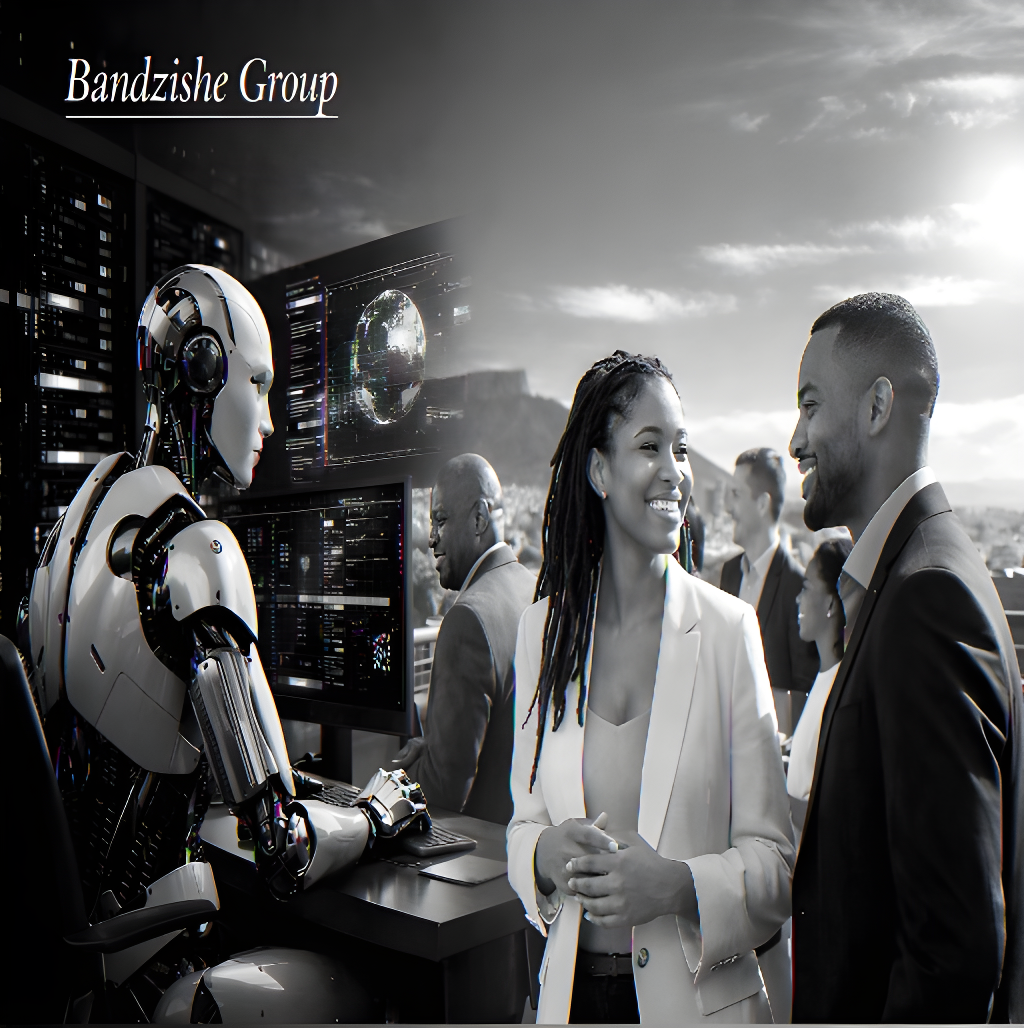

If your value proposition is based on your ability to calculate, to predict, or to synthesise vast amounts of data, you are already a relic of a bygone industrial age. The machine does not tire; it does not err in its deductions; it does not demand a seat at the executive table. Why should a corporation pay a premium for human logic when a bot can deliver superior reasoning for the price of electricity? This is the Great Divorce, the moment where intelligence is decoupled from humanity. Leaders who fail to grasp this shift are not merely behind the curve; they are effectively extinct. The future belongs exclusively to those who can master the one domain where the machine is utterly, hopelessly impotent: the visceral, messy, and profoundly powerful realm of human empathy. We are witnessing the birth of the Empathy Economy, where EQ is the only currency that retains its value.
Is it not an exercise in futility to compete with a calculator on its own terms? We must ask ourselves why we continue to hire expensive graduates for roles that require them to act like glorified spreadsheets. The logical functions of business, once the preserve of the elite, are now utility services available via an application programming interface. The truly sophisticated leader does not fear automation; they weaponise it to liberate the human spirit for higher pursuits of judgement, meaning, and moral authority. Logic is a solved problem. The real challenge, the one that keeps billionaires awake at night, is the creation of authentic human connection in a world increasingly starved of it. To cling to IQ as a competitive advantage is to bring a knife to a nuclear confrontation. We must move beyond the binary of right and wrong to the spectrum of felt experience. This is not a soft pivot; it is a hard, strategic realignment of what it means to create value. Only those with the intellectual courage to dismantle their own logical foundations will survive the transition to the sentient enterprise.
The Provocation Leaders Avoid Confronting: Intelligence Has Become Cheap, Judgement Has Become Priceless
The most dangerous misconception in contemporary corporate strategy is the belief that artificial intelligence represents a marginal efficiency upgrade rather than a civilisational reallocation of work, power, and responsibility. Logic has been commoditised. Pattern recognition has been industrialised. Decision velocity has been automated. What once conferred advantage now merely grants entry. Yet many boards still behave as though the central question is which tools to buy, which vendors to trust, or which pilots to fund. The real question is far more uncomfortable. If machines can now perform logic at a scale and speed no human institution can rival, what precisely remains the defining function of leadership? More pointedly, what becomes of customer experience when intelligence is abundant but empathy is scarce? This is not a technological dilemma. It is a strategic reckoning. Those who mistake one for the other will optimise themselves into irrelevance. Those who understand the distinction will quietly build unassailable advantage.
The Sovereign Value of Sentience: Why Empathy Is the Ultimate Barrier to Entry
If logic is now a commodity, then empathy is the only remaining scarcity, and scarcity is the fundamental driver of premium pricing. A bot can tell a customer exactly why their insurance claim was denied with flawless accuracy and zero delay. However, only a human can navigate the grief, the frustration, and the existential dread that accompany that denial in a way that preserves the brand relationship. We are entering an age where the customer experience is no longer about the resolution of a problem, but the quality of the journey through that problem. Machines can simulate concern, but they cannot feel it, and in a hyper-connected world, the human nose for inauthenticity has never been sharper. The high-level strategist understands that empathy is not a vague corporate virtue, but a sophisticated psychological tool for market dominance. It is the ability to read the unsaid, to anticipate the emotional vacuum, and to fill it with genuine presence. Can an algorithm truly understand the nuances of South African Ubuntu or the intricate social codes of a London private club? The answer is a resounding no. Therefore, the roles that define the future are those that require high levels of emotional intelligence, cultural fluency, and moral judgement.
How many millions are squandered daily by firms that prioritise algorithmic efficiency over human resonance? The irony of the digital age is that the more we automate, the more we crave the touch of the personal. We see this in the resurgence of bespoke services and the premium placed on face-to-face advisory roles. The most successful corporations of the coming decade will be those that consign logic-intensive work to machines, while allowing the front office to focus entirely on dignity, trust, and the human soul. This requires a complete retooling of our recruitment and training pipelines. We no longer need people who can follow instructions; we need people who can break them when the human moment demands it. This is the essence of customer experience leadership: the power to exercise discretion rooted in empathy. Every interaction is a site of emotional labour that cannot be outsourced to a data centre in Dublin or Singapore. To lead in this new landscape is to recognise that the most important data point is not a number, but a feeling. If you cannot master the heart, you have no business claiming the mind.
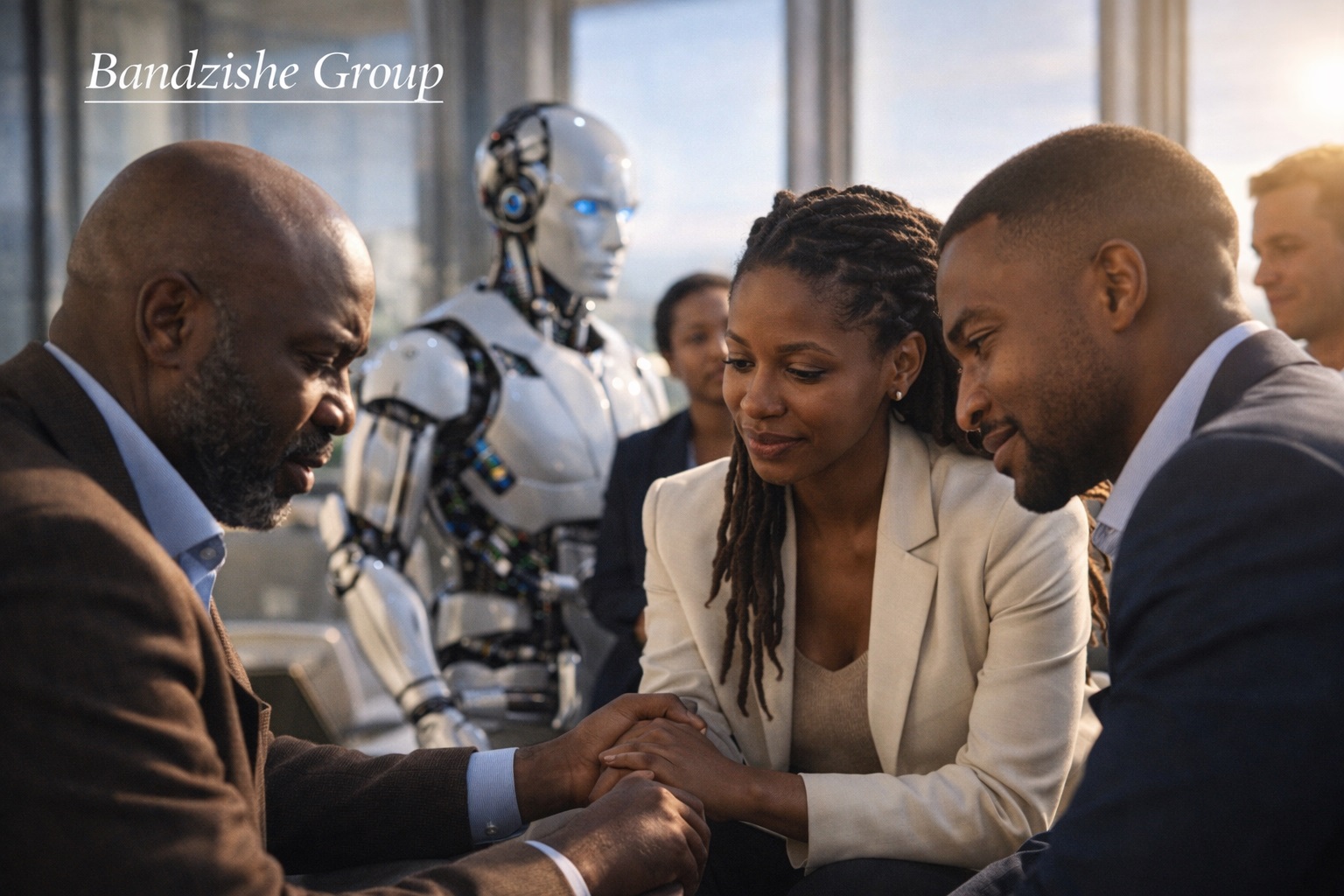
For instance, let us analyse the above image and decipher what the image is fundamentally doing. This image does not depict technology and humanity as equals.
It stages a hierarchy of legitimacy. At its core, the image asserts a single proposition: Sentience governs. Technology observes. Everything else flows from that. Foreground dominance is where sovereignty resides. The visual centre of gravity is unmistakable. Three Black South African professionals occupy the foreground, physically close, visually warm, and emotionally legible. Their bodies lean inward. Their hands meet. Their faces register concentration, care, discernment, and trust. This is not friendliness. This is relational authority. The clasped hands are the critical symbol. They communicate recognition, mutual obligation, and moral accountability. No interface. No protocol. No instruction set. This is judgement under uncertainty, the precise domain where machines fail. That is the sovereign territory of sentience. Do you see depiction of Empathy as an exclusionary force, not a soft virtue? Notice something subtle but decisive. The empathy here is not broadcast outward. It is contained. The humans are not performing empathy for the machine. They are not explaining themselves. They are not seeking validation. They are engaged with one another, in a closed moral loop. This is why empathy functions as a barrier to entry in the image. It is not offered universally. It is earned through shared context, history, and presence. The image visually encodes this truth: Empathy is not inclusion. It is selection. Machines cannot enter because there is no door.
Do you notice the machine’s placement, presence without participation? The robot is visible, but it is structurally excluded. It stands behind. It does not touch. It does not lean in. Its gaze is observational, not reciprocal. Crucially, the robot is well designed, competent, and alert. This matters. The image does not infantilise technology. It grants it capability, even sophistication. Yet capability is not legitimacy. The machine is positioned as a witness to something it cannot internalise. It can see empathy. It cannot cross into it. This is precisely what makes empathy the ultimate barrier to entry.
Cultural specificity, this image depicts Ubuntu without explanation. There is no iconography screaming “Ubuntu”. No slogans. No didactic cues. Instead, Ubuntu is expressed behaviourally. The shared posture. The physical proximity. The unspoken coordination. The collective seriousness without aggression. These are culturally legible signals to those who know them, and largely unreadable to those who do not. That unreadability is intentional. The image does not translate itself. It assumes belonging. That assumption is power.
The Great Misallocation of Effort: When Humans Compete with Machines on the Wrong Battlefield
Across global enterprises, from Johannesburg to London, from Mumbai to San Francisco, one observes the same pathology repeated with minor local variation. Highly paid human talent is trapped performing analytical labour that machines now execute more accurately, more consistently, and without fatigue. Meanwhile, customers encounter experiences that are faster but thinner, more efficient but less humane. Why does this happen? Because organisations have not rearchitected work around the capability truth. They have merely layered technology onto legacy operating models. This is not transformation. It is cosmetic acceleration. In such environments, humans are forced into pseudo-rational roles while machines are deployed without moral context or emotional intelligence. The result is a strategic inversion. The very capabilities that differentiate human leadership are suppressed, while machines are underutilised for what they do best. The customer, perceptive and unforgiving, feels this imbalance immediately.
IQ at Scale and EQ at Depth: The Only Sustainable Division of Labour
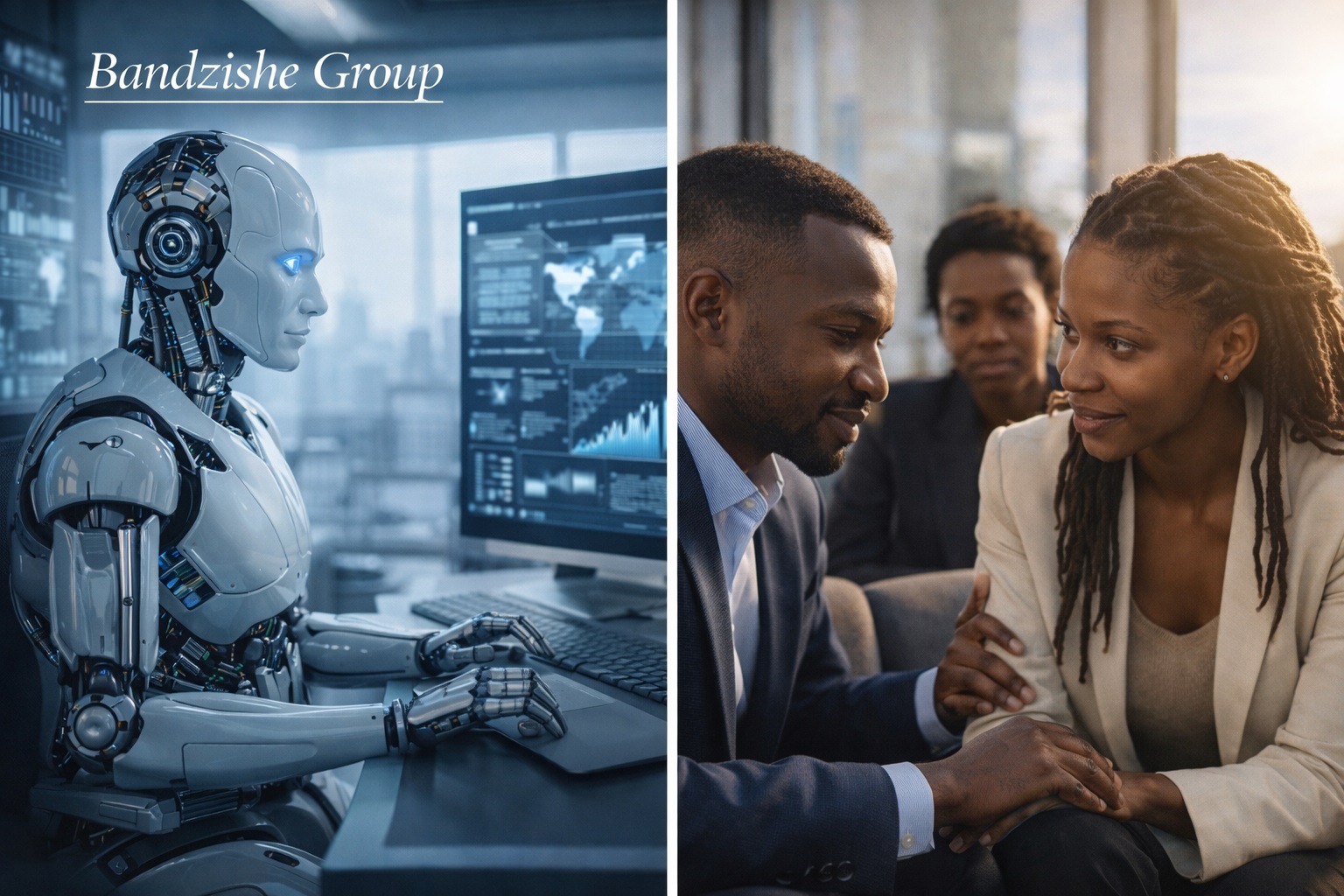
There is a simple but unforgiving logic at the heart of the modern enterprise. Machines excel at IQ tasks. They classify, predict, optimise, simulate, and execute. They do so without ego, fatigue, or bias in intent, even if bias exists in data. Humans excel at EQ tasks. They interpret meaning, hold ambiguity, navigate trust, repair relationships, and make ethical judgements under uncertainty. When organisations confuse these domains, customer experience collapses into process theatre. When they respect them, experience becomes strategic capital. The question leaders must confront is not whether to automate, but what to liberate. Every hour a human spends validating forecasts, reconciling data, or executing scripted logic is an hour stolen from the deeper work of leadership. Every customer interaction mediated entirely by logic is an interaction stripped of dignity.
Customer Experience as Leadership Expression: Why Empathy Is No Longer Optional
Customer experience has long been mischaracterised as a function, a department, or a set of metrics. In truth, it is a leadership stance made visible through systems, behaviours, and decisions. When machines handle logic, leaders are freed to do the harder work of judgement. This includes deciding when efficiency must yield to trust, when policy must bend to context, and when short-term optimisation undermines long-term loyalty. Consider the banking sector in South Africa, where advanced fraud detection systems have dramatically reduced transactional risk. The institutions that now lead in customer trust are not those with the most sophisticated models, but those that empower frontline leaders to override automated outcomes when human context demands it. Empathy here is not sentiment. It is strategic discernment.
Agentic AI as Invisible Infrastructure: Making Intelligence Disappear from the Customer’s View
The most advanced organisations are quietly arriving at the same conclusion. Intelligence should be omnipresent but invisible. Customers should never feel the machinery. They should feel understood. In global retail, companies such as Zara have deployed predictive systems that optimise inventory allocation with extraordinary precision. Yet the customer experience advantage does not arise from the algorithm itself. It arises from the fact that store managers are freed from manual forecasting and can focus on human engagement, visual storytelling, and situational judgement. The machine handles the logic. The human curates the meaning. This is not accidental. It is designed.
Strategic Paradigms in Practice: Global Excellence and The South African Context

Consider the transformative journey of a global titan such as Goldman Sachs, which has transitioned from a bastion of human analysts to a technology-driven powerhouse where code handles the heavy lifting of trade execution. This transition did not result in the obsolescence of the banker; rather, it elevated the role of the banker to that of a high-level emotional advisor and strategic partner. By offloading the logic to bots, the firm allows its human capital to focus on the complex, trust-based relationships that drive multi-billion-dollar mergers. In the South African context, we look at the remarkable success of Discovery Limited, a firm that has integrated behavioural science with insurance logic. While their algorithms manage the risk profiles, it is their ability to engage with the lived reality of their members that creates the brand loyalty. This represents the emerging gold standard of the new economy: logic executed by machines; empathy delivered by humans. When a South African consumer interacts with a high-end service, they expect a level of warmth and recognition that no chatbot can replicate. The genius of Discovery lies in using data to empower human intervention, not to replace it.
What occurs when a firm neglects this balance in favour of pure, unadulterated automation? We need only look at the numerous retail banks that have alienated their high-net-worth clients by forcing them through rigid, logic-based digital loops. These institutions have forgotten that the wealthy do not pay for logic; they pay for the feeling of being understood and prioritised. A practical tactical example can be found in the luxury hospitality sector, where brands like Aman Resorts use technology to track preferences with invisible precision. The guest never sees the database, but they feel the result when the staff anticipates their needs with a level of intuition that feels like magic. This is not the result of better software, but of human beings who have been given the time and the mandate to care. In South Africa, the telecommunications sector faces a similar crossroads. The firms that will win are those that stop treating customer support as a cost centre to be minimised by AI and start treating it as a theatre of empathy. Real-world success in this domain requires a radical shift in how we measure performance. Efficiency is the metric of the machine; resonance is the metric of the human.
The South African Imperative: Empathy as a Competitive Advantage in Complex Markets
In markets marked by inequality, historical trauma, and social fragmentation, empathy is not a soft skill. It is an economic necessity. South African telecommunications firms provide a revealing case. AI-driven network optimisation has improved service reliability dramatically. Yet the operators that outperform on customer loyalty are those that pair automation with culturally fluent human intervention during moments of disruption. When load shedding interrupts service, customers do not seek explanations. They seek acknowledgement. Machines can diagnose the fault. Only humans can restore dignity. Leaders who fail to grasp this distinction will continue to invest in technology while eroding trust.
Ubuntu as Strategic Intelligence: Why Cultural Nuance Defies Algorithmic Reduction

There is a category error embedded in much of the global discourse on artificial intelligence, which is the assumption that all human values can eventually be formalised, encoded, and optimised. Ubuntu exposes the poverty of that assumption with brutal clarity. Ubuntu is not a dataset, a sentiment score, or a behavioural proxy. It is a relational ethic grounded in mutual recognition, shared humanity, and moral obligation that emerges only through lived social context. An algorithm can identify patterns of communal behaviour in South African markets, but it cannot comprehend why dignity often matters more than speed, why acknowledgement can outweigh resolution, or why fairness is judged through collective memory rather than individual transaction.
In customer experience terms, Ubuntu manifests in moments that defy automation, moments where customers are not seeking efficiency but affirmation, not answers but respect. Organisations that attempt to algorithmically approximate Ubuntu risk committing a strategic offence, mistaking correlation for comprehension. The leaders who succeed in South Africa understand this distinction intuitively. They deploy machines to handle logic with ruthless efficiency, while deliberately preserving human discretion at points where cultural meaning is at stake. In this context, empathy is not a universal abstraction but a locally grounded leadership competence. Ubuntu, therefore, becomes not a cultural footnote, but a strategic lens, revealing precisely why EQ jobs cannot be surrendered to systems, no matter how advanced those systems become.
The Leadership Reconfiguration Few Are Prepared to Make: From Control to Orchestration
If machines handle logic, leadership must relinquish its historical obsession with control. The role of the executive shifts from decision author to system architect, from operational overseer to moral custodian. This requires intellectual confidence of a rare kind. It demands the courage to allow machines to outperform humans in areas once considered core to managerial authority. In return, leaders must step into the far more demanding work of sense-making. This includes setting ethical boundaries for autonomous systems, resolving conflicts between algorithmic recommendations and human values, and designing experiences that respect the full humanity of the customer. This is not abdication. It is elevation.
The Architectonics of Action and Transformation: Practical Blueprints for the Sentient Enterprise
The path forward is neither abstract nor optional. It requires deliberate structural change. To build a business where machines handle logic and humans handle empathy, a CEO must first perform a radical audit of their corporate anatomy. Every process must be categorised into two distinct streams: the Rational Stream and the Empathic Stream. The Rational Stream, encompassing data entry, financial forecasting, and technical troubleshooting, must be aggressively automated using the most advanced AI models available. Conversely, the Empathic Stream, involving negotiation, conflict resolution, and brand storytelling, must be protected and amplified through intensive human investment. Leadership must stop hiring purely for technical proficiency and begin prioritising emotional agility, narrative intelligence, and the capacity to sit with human complexity. The classroom must be replaced by the workshop, where employees are trained in the arts of active listening, psychological safety, and the nuances of non-verbal communication. This is the practical solution to the looming crisis of workforce displacement: we are not losing jobs; we are finally being allowed to be human again. The sentient enterprise is one that recognises that its most valuable assets are not its patents, but the quality of the relationships its people can forge.
Are you prepared to fire your best-performing analyst if they lack the capacity for genuine human connection? This is the level of intellectual courage required to lead in the age of the bot. We must implement systems of "Empathy Audits" where the emotional impact of every customer touchpoint is measured with the same rigour as a balance sheet. Practical tactical steps include the deployment of sentiment analysis tools not to replace human feedback, but to alert human managers to where their intervention is most needed. For South African companies, this means leveraging our rich heritage of social cohesion to create a unique global competitive advantage. We can export our expertise in human-centric service to a world that has become cold and transactional. The blueprint for success is clear: automate the predictable so that you can celebrate the unpredictable. Every investment in technology must be matched by a reciprocal investment in human flourishing. The ultimate goal is to create a business that is as efficient as a machine and as warm as a home. This is the paradox of modern leadership: the more we use bots, the more we must value people.
What are the initial practical tactical steps? How do organisations redesign now? First, organisations must audit work, not roles. Every activity should be classified by its dominant intelligence requirement. Logic-heavy tasks belong to machines by default. Second, decision rights must be reallocated. Humans should retain authority where context, ethics, and relationships matter. Third, customer experience metrics must evolve. Speed and accuracy are table stakes. Trust, emotional resolution, and perceived fairness become the differentiators. Fourth, leadership development must be reoriented. Analytical excellence is no longer sufficient. The leaders of the next decade will be judged by their capacity for judgement under uncertainty.
Customers Tolerate Efficiency Failures; They Do Not Forgive Dehumanisation: When Efficiency Erodes Organisational Legitimacy
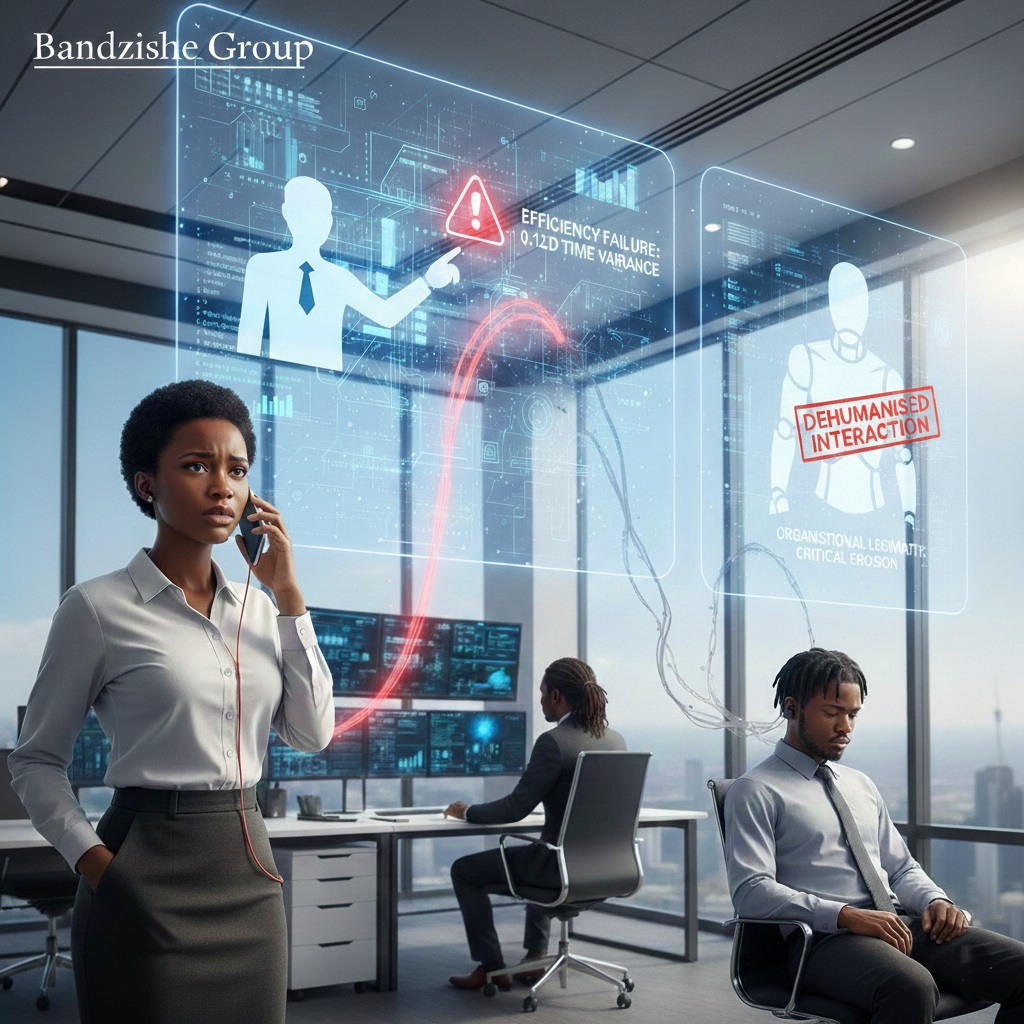
There is a final danger that must be named. Organisations that pursue automation without empathy do not merely risk poor experience. They risk moral illegitimacy. Customers tolerate efficiency failures. They do not forgive dehumanisation. In an era where choice is abundant and voice is amplified, trust becomes the scarcest resource. Machines cannot generate it. They can only preserve or destroy it, depending on how they are governed. Leadership, therefore, is no longer about mastering complexity alone. It is about choosing where complexity must remain human.
The Risk Management: Limits and Safeguards
Automation without human oversight creates brittle systems and reputational risk; human labour without augmentation becomes inefficient and demoralised. Mitigate these risks through transparent governance, robust privacy protections, and continuous human review of edge cases. Treat automation as a strategic asset, not a cost-cutting exercise, and align incentives to reward empathy as a measurable business outcome.
Make Machines Think, and Humans Feel, Simultaneously and Deliberately: Empathy Is the Final Frontier of Advantage
The future belongs to organisations that can make machines think, and humans feel, simultaneously and deliberately. Embrace that design, now, and lead the market rather than follow it. The future enterprise will not be defined by how intelligently it automates, but by how wisely it differentiates between what should be automated and what must remain human. Logic belongs to machines because machines were built for it. Empathy defines leadership because leadership exists to serve people. Customer experience sits at the intersection of these truths. Those who grasp this will design organisations that feel effortless, humane, and trustworthy, even as they operate with extraordinary precision beneath the surface. Those who do not will continue to optimise processes while losing hearts. The choice is stark. Delegate logic without fear. Embrace empathy without apology. Redesign now, or be redesigned by forces far less forgiving.
Leadership and Employees Cannot Avoid the Messy Realities of Human Emotion: Sentience Is the Only True Differentiator

The transition from a logic-based economy to an empathy-based economy is not a suggestion; it is an existential imperative. We have reached the end of the road for the traditional manager who hides behind spreadsheets and avoids the messy realities of human emotion. If you are a CEO or a billionaire who still believes that your superior IQ will protect you, then you are delusional. The machine has already won the battle for the mind; the only territory left for us to occupy is the heart. The real challenge before today’s leaders is to stop optimising for a fading past and start designing for a future in which sentience is the only true differentiator. This requires a level of intellectual self-confidence that allows you to let go of the old metrics of success. The winners of tomorrow will be those who can command the machine with precision while leading their people with profound compassion. We must embrace the complexity of our own humanity as our greatest strategic asset. Do not wait for the catastrophe of obsolescence to force your hand; advance into the challenge with the transformative intent that defines true leadership.
The question is no longer whether you will integrate AI, but whether you have the courage to remain human in the process. Will you be the architect of a cold, automated wasteland, or the visionary behind a vibrant, sentient empire? The world does not need more logic; it is drowning in it. What the world craves is the warmth of a voice that understands, the firmness of a hand that cares, and the clarity of a mind that prioritises the soul. This moment demands intellectual courage rather than retreat, for the most intricate challenges of the digital age are proving to be the most fertile ground for genuine human innovation. We do not retreat from the difficulty of this shift; we recognise it as the most fertile ground for innovation in human history. The choice is yours: stay attached to your falling cognitive fortress or build a bridge to the empathy economy. The time for deliberation is over. The time for radical, human-centric transformation is now. Embrace your distinction, master your empathy, and lead your business into the only future that matters.
Images by Bandile Ndzishe of Bandzishe Group
About bandile ndzishe

Bandile Ndzishe is the CEO, Founder, and Global Consulting CMO of Bandzishe Group, a premier global consulting firm distinguished for pioneering strategic marketing innovations and driving transformative market solutions worldwide. He holds three business administration degrees: an MBA, a Bachelor of Science in Business Administration, and an Associate of Science in Business Administration.
With over 30 years of hands-on expertise in marketing strategy, Bandile is recognised as a leading authority across the trifecta of Strategic Marketing, Daily Marketing Management, and Digital Marketing. He is also recognised as a prolific growth driver and a seasoned CMO-level marketer.
Bandile has earned a strong reputation for delivering strategic marketing and management services that guarantee measurable business results. His proven ability to drive growth and consistently achieve impactful outcomes has established him as a well-respected figure in the industry.
As an AI-empowered and an AI-powered marketer, I bring two distinct strengths to the table: empowered by AI to achieve my marketing goals more effectively, whilst leveraging AI as a tool to enhance my marketing efforts to deliver the desired growth results. My professional focus resides at the nexus of artificial intelligence and strategic marketing, where I explore the profound and enduring synergy between algorithmic intelligence and market engagement.
Rather than pursuing ephemeral trends, I examine the fundamental tenets of cognitive augmentation within marketing paradigms. I analyse how AI's capacity for predictive analytics, bespoke personalisation, and autonomous optimisation precipitates a transformative evolution in consumer interaction and brand stewardship. By extension, I seek to comprehend the strategic applications of artificial intelligence in empowering human capability and fostering innovation for sustainable societal advancement.
In essence, I explore how AI augments human decision-making and strategic problem-solving in both marketing and other domains of life. This is not merely an interest in technological novelty, but a rigorous investigation into the strategic implications of AI's integration into the contemporary principles of marketing practice and its potential to reshape decision-making frameworks, rearchitect strategic problem-solving paradigms, enhance strategic foresight, and influence outcomes in diverse areas beyond the marketing sphere.