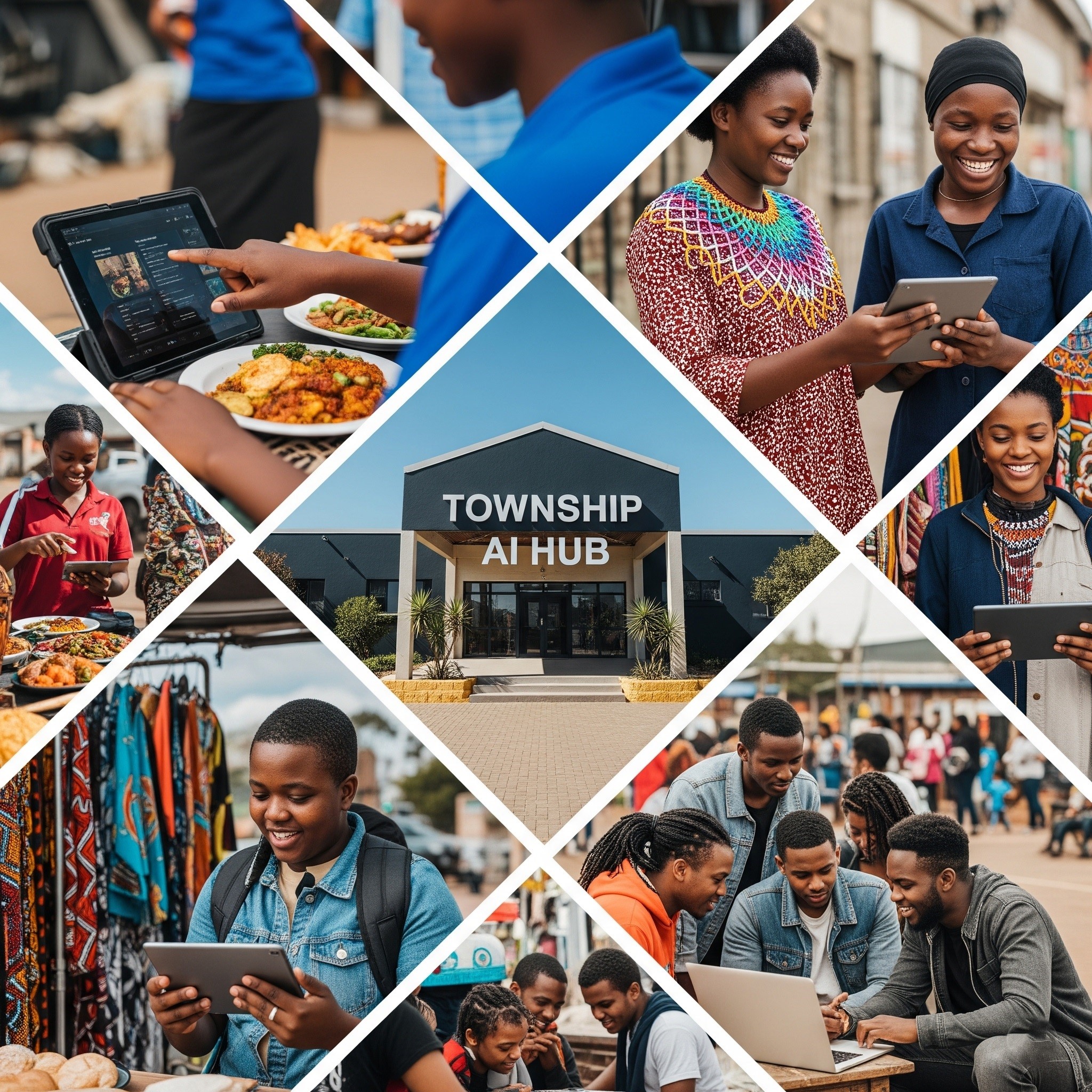

The promise of artificial intelligence assumes a far more urgent and profound significance when considered against the backdrop of South Africa’s economic landscape. At 42.9%, almost half the working-age population is unemployed, a figure that reflects the expanded definition, which accounts for those who’ve stopped looking for work out of frustration or despair. With the standard unemployment rate now at 33.2% in the second quarter of 2025, the scale of economic exclusion is staggering. These figures, released by Stats SA in August 2025, reflect more than just statistics; they represent lives stalled, potential untapped, and communities in need of renewal. It is a soul-crushing reality that has robbed millions of their dignity, purpose, and hope.
The level of unemployment in my country today is an apocalyptic human tragedy. It is the greatest calamity of our age. This is not merely a statistical anomaly; it is a lived catastrophe. The jobless population is presently in the midst of this dystopian tragedy. It is no longer an imagined dystopia but our currently lived dystopian reality inside an apocalyptic South African existence, experienced by the entire unemployed population.
Yet within this crisis lies a catalytic opportunity, not to retreat in despair, but to reimagine the architecture of economic participation. Artificial intelligence, far from being a threat, offers a transformative pathway: To revitalise township economies, to create meaningful employment, and to foster inclusive prosperity. It is a chance to reframe the narrative, where technology does not displace human potential, but amplifies it.
The potential of AI extends far beyond enhancing corporate efficiency or driving technological innovation; it holds transformative potential for communities historically underserved, such as South Africa's townships. These vibrant, culturally rich areas often brim with entrepreneurial spirit but face systemic barriers to growth and prosperity. Can AI provide the impetus to unlock township economies, fostering inclusive development and sustainable wealth creation? The answer lies in strategic, community-centred integration. AI-powered entrepreneurship must be embraced not merely as a futuristic ambition but as a tangible pathway to addressing structural inequalities while simultaneously driving global competitiveness.
The Promise of AI in Township Economies: Addressing the Systemic Economic Challenges
AI emerges as a catalyst for reshaping traditional economic paradigms, particularly within the township economy. Can AI-powered entrepreneurship offer a meaningful solution to the challenges faced by township communities? The answer lies in its capacity to revolutionise business operations, enhance accessibility to markets, and amplify employment opportunities. Township economies, often characterised by informal trade and micro-enterprises, face systemic challenges such as limited resources, lack of infrastructure, and restricted access to global markets. However, AI empowers entrepreneurs to transcend these barriers by harnessing data-driven insights, automating processes, and accessing platforms that connect them to broader economic ecosystems. It paves the way for a modernised township economy that is inclusive, innovative, and growth-oriented.
Leveraging AI and Redefining Township Entrepreneurship: Creating AI-Driven Township Entrepreneurs
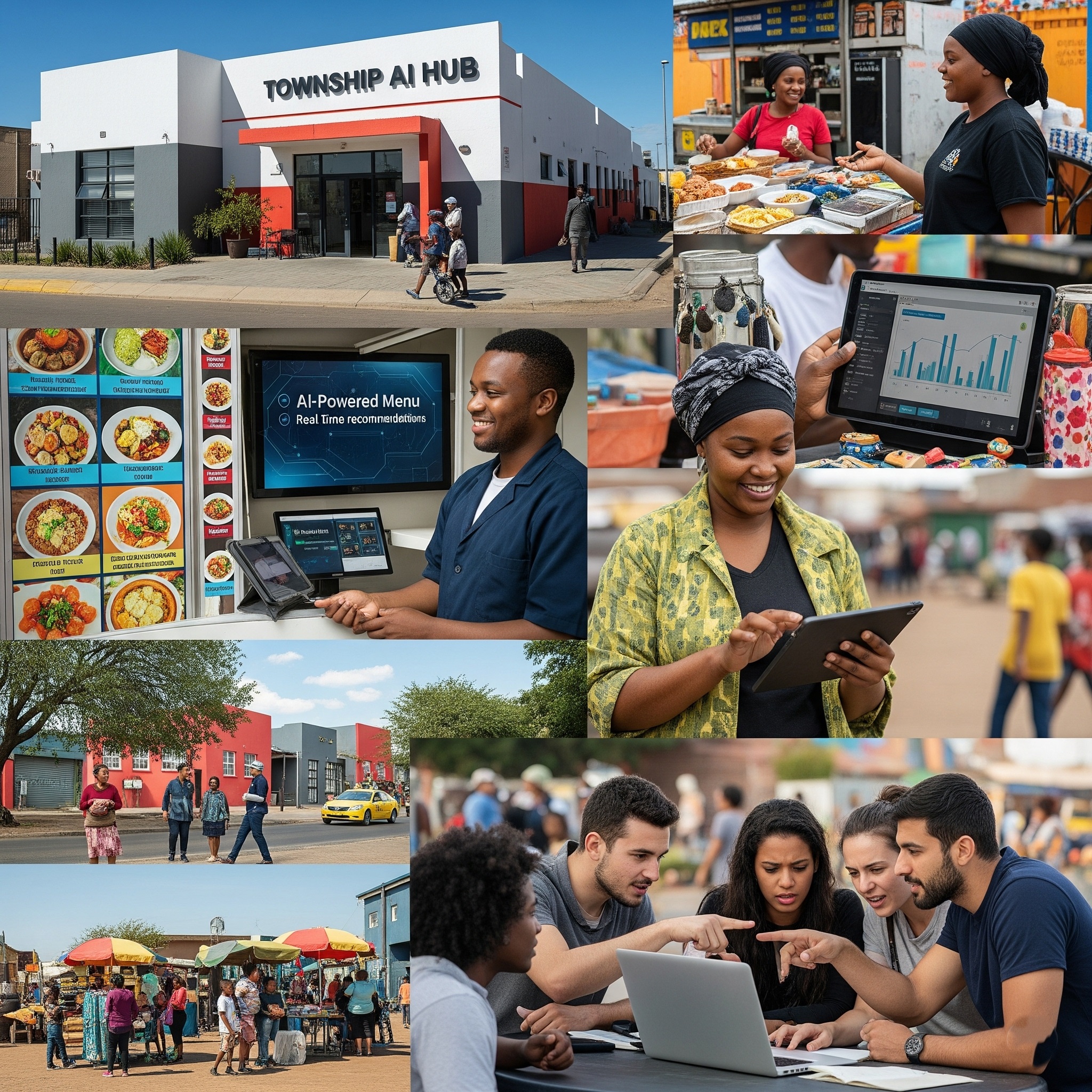
How do we empower AI-driven township entrepreneurs to grow South Africa's township economies? To begin with, fostering entrepreneurship within these communities requires targeted AI-driven initiatives designed to address their unique socio-economic conditions. Township entrepreneurs can utilise AI tools to create businesses that address hyperlocal challenges, such as informal market logistics, small-scale manufacturing, and retail optimisation. A prime example is the potential development of AI-powered e-commerce platforms tailored for township economies. Such platforms could connect township vendors with broader markets, leveraging AI for inventory management, dynamic pricing, and customer recommendations.
Furthermore, AI-driven transport apps could optimise minibus taxi routes based on real-time data, improving efficiency and affordability for commuters while creating tech-based operational roles within the townships. For instance, an inspiring case study is South Africa’s SweepSouth, a company that harnesses AI to streamline domestic cleaning services and connect domestic workers with clients, creating employment opportunities for thousands while operating profitably in underserved markets. Township entrepreneurs can adopt similar AI models, connecting job seekers with employers for various township-specific services, from construction to tailoring.
Education and upskilling are also critical. Imagine AI-powered learning platforms that provide township-based entrepreneurs with training in financial management, digital marketing, and AI integration. With these resources, township businesses can professionalise their operations, attract investment, and expand their customer base. The next generation of AI-driven township entrepreneurs could transform these economies into vibrant hubs of productivity and innovation, creating massive employment in the process.
Creating Jobs: AI as a Catalyst for Employment in Townships
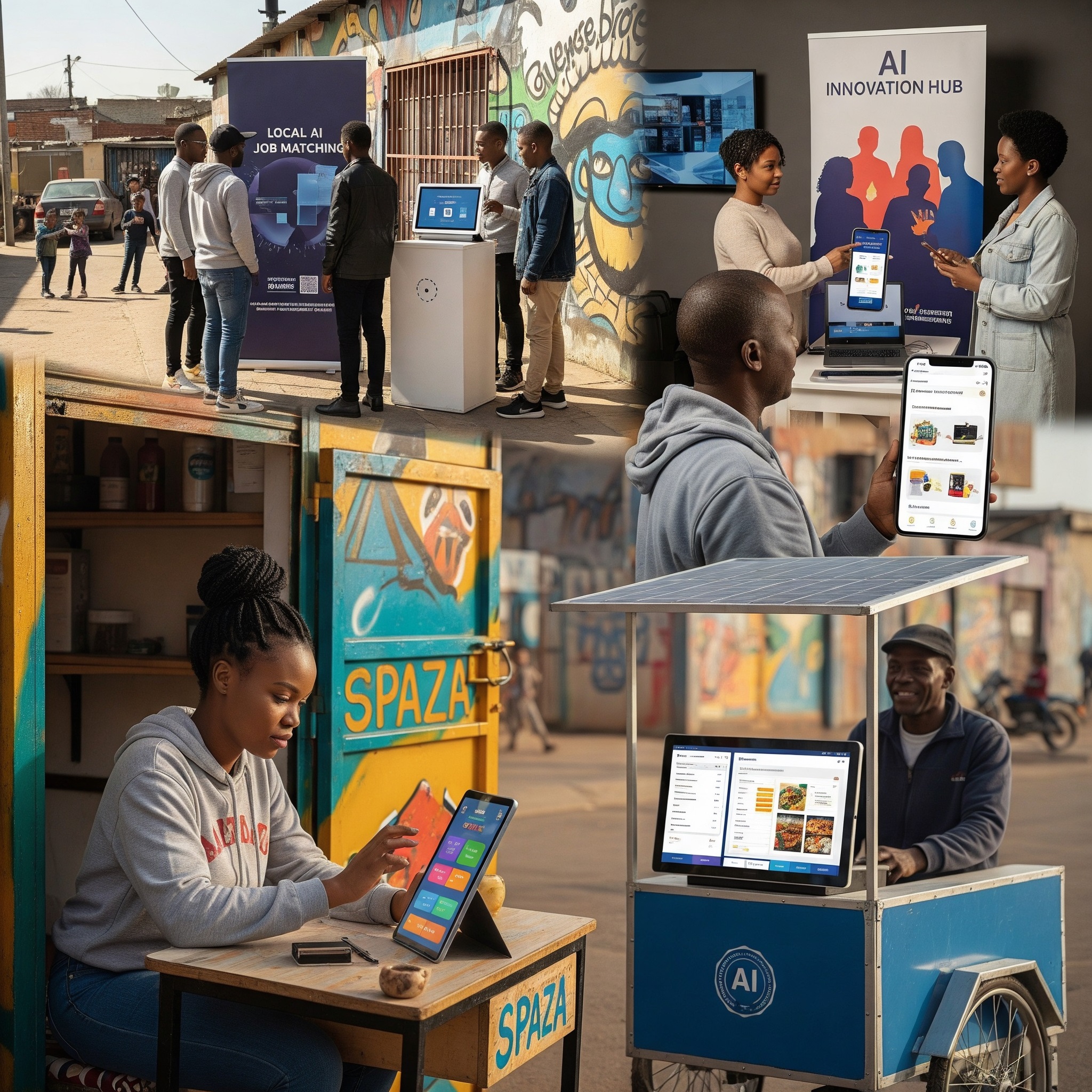
AI-powered entrepreneurship addresses unemployment, but what concrete steps can be taken to implement this? Entrepreneurs can adopt AI-driven tools in sectors such as e-commerce, digital marketing, and app development. To achieve this, a structured roadmap could involve government-backed incubator programmes that guide township entrepreneurs through the setup of AI-enabled businesses. For instance, micro-loans and mentorship schemes could be directed towards startups that employ AI solutions tailored to their communities.
The case of DataProphet, a South African company improving manufacturing processes through AI, exemplifies job creation through tech-driven innovation. Scaling such efforts into townships can be transformative. Globally, Google's AI-based skills initiatives serve as a blueprint for empowering underserved populations, which could be replicated locally through tailored vocational training programmes targeting township youths. With unemployment posing systemic challenges, these steps ensure that opportunities created by AI benefit both skilled and entry-level workers in township economies.
Broadening the Scope: Healthcare and Agriculture as AI Frontiers
How can township economies benefit from AI beyond traditional commerce? Expanding AI applications into sectors like healthcare and agriculture can provide additional momentum. In healthcare, AI diagnostic tools can make medical services more accessible to township communities, addressing the disparities in healthcare delivery. Imagine a township clinic equipped with AI solutions that remotely monitor patients and offer early diagnostic insights, drastically improving health outcomes. Programmes like those spearheaded by the University of Cape Town’s AI research teams could be scaled into township clinics.
In agriculture, township-based subsistence farmers could utilise AI-powered platforms for crop monitoring, pest control, and yield prediction. Implementation frameworks could include partnerships with agritech startups such as Aerobotics, a South African company that uses AI and drone technology to assist farmers. These solutions not only improve productivity but also open doors for new entrepreneurial ventures focused on distributing AI-enabled agricultural tools.
Optimising Supply Chains: AI-Driven Logistics for Township Businesses
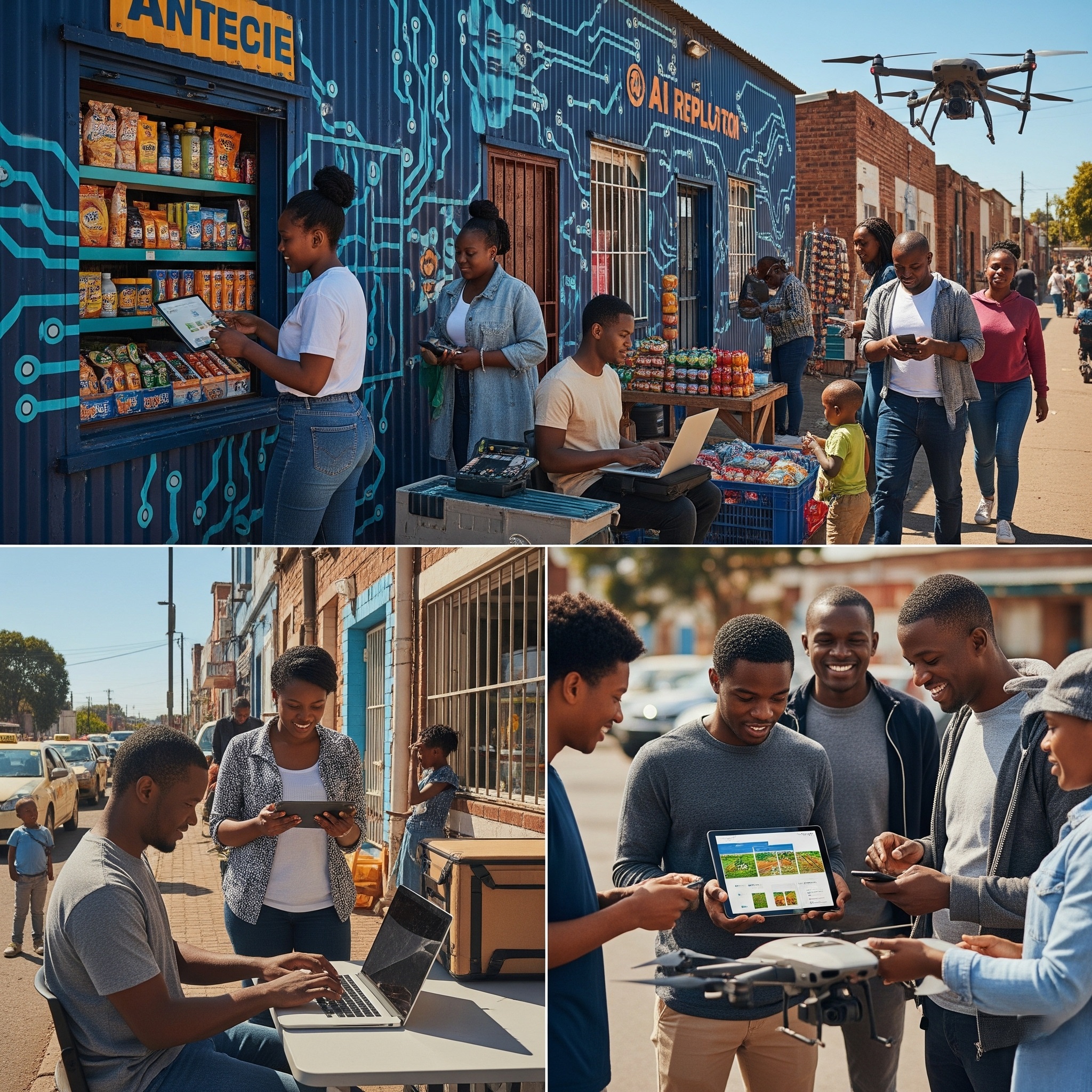
Consider the transformative impact of AI-driven logistics platforms. How can technology optimise supply chains in underserved areas? AI-powered platforms, such as South Africa's Parcel Ninja, have demonstrated remarkable efficiency in solving distribution challenges by integrating smart algorithms with real-time data. Township entrepreneurs can leverage these systems to efficiently source products, track inventories, and ensure timely deliveries, even in the most remote areas. Implementation frameworks could include partnerships between AI logistics providers and township micro-enterprises, where township entrepreneurs receive training to adopt these technologies seamlessly. Furthermore, offering subsidised access to AI-powered tools through public-private partnerships ensures inclusivity for small business owners.
Globally, companies like Amazon have employed AI in logistics to empower small sellers, a concept that can be adapted for township economies. Imagine customised logistics networks integrating autonomous delivery systems tailored for township terrains, an opportunity ripe for exploration. Such innovations not only minimise operational costs but also create new layers of employment in supply chain management and technology maintenance.
Bridging the Digital Divide: Education as a Foundation for AI Empowerment
One pivotal aspect of AI-powered entrepreneurship is education. How do we ensure township communities are equipped to harness AI effectively? Education serves as the cornerstone for cultivating a future-ready workforce. Initiatives such as CodeSpace, offering coding boot camps tailored to township youth, are crucial in this regard. A roadmap for scaling these efforts could involve mobile AI labs and partnerships with corporations like Coursera to deliver training programmes that address local needs.
Furthermore, township schools could be equipped with AI labs through public-private partnerships, introducing students to AI technology at an early age. Reflecting on this, I often envision a future where AI literacy empowers young entrepreneurs to create solutions that address local challenges while competing on a global stage. International collaborations with tech giants could amplify these efforts, ensuring scalability and sustainability.
AI Hubs: Incubators for Township Innovation
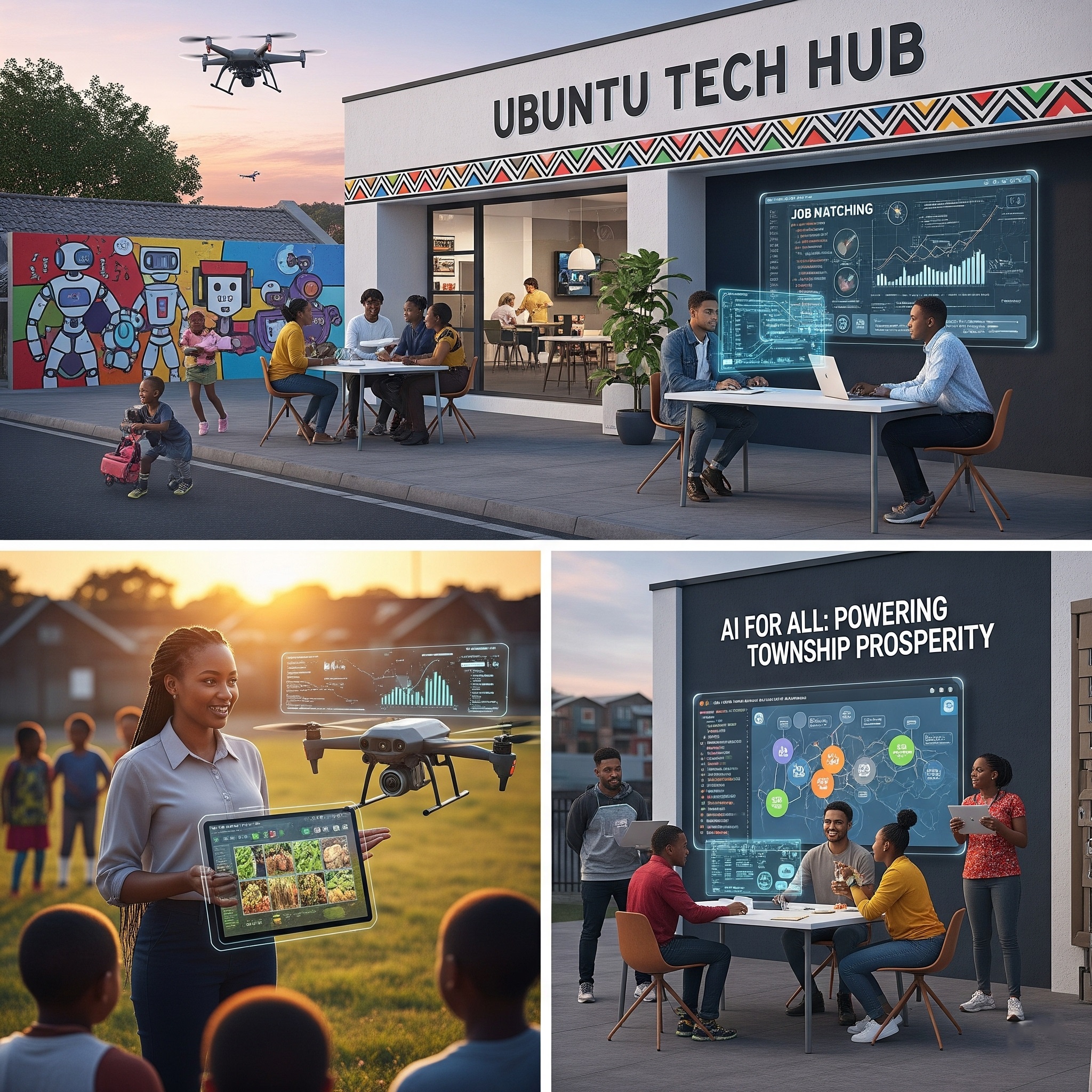
To further explore practical solutions, the establishment of AI hubs within township economies provides fertile ground for innovation and collaboration. How do we transform townships into incubators of technological progress? AI hubs can serve as community centres equipped with tools for research, development, and entrepreneurship. A practical roadmap would involve selecting pilot townships, creating shared workspaces, and equipping them with the necessary tools and mentorship programmes.
Silicon Cape’s success as a tech hub in South Africa demonstrates the viability of such initiatives. Globally, Microsoft’s AI innovation centres provide a roadmap for building community-focused tech hubs. In township contexts, these hubs could also double as training centres, where aspiring entrepreneurs learn to develop AI-driven solutions for local challenges.
A Cultural Shift: Inspiring Resilience and Growth Among Township Entrepreneurs
Beyond operational innovations, AI-powered entrepreneurship fosters a cultural shift, an ethos of resilience and ambition. How do we inspire township entrepreneurs to adopt a mindset of continuous growth? Reflecting on this, I often think about the innate resourcefulness and creativity within township communities, qualities that AI can magnify exponentially. AI tools enable predictive analytics, helping entrepreneurs forecast market trends and tailor products to meet consumer demands effectively. This forward-thinking approach not only strengthens individual businesses but also contributes to the collective economic upliftment of townships.
Practical Solutions: Capacity Building and Funding Access
What steps are necessary to integrate AI into township businesses effectively? What specific actions can stakeholders take to embed AI into township businesses and catalyse transformation? Practical solutions begin with capacity building: Governments, NGOs, and private entities must prioritise AI literacy and provide technical training tailored to township entrepreneurs. South African corporates can establish incubation programmes, pairing AI experts with local business owners to co-develop scalable models. Access to funding remains critical; introducing specialised AI-driven investment funds designed to mitigate risks and offer grants to promising township ventures could be pivotal.
On the global stage, Fortune 500 companies can actively collaborate with township businesses, supplying resources, mentorship, and market access that amplify impact. These are not abstract recommendations; they represent tangible steps towards robust ecosystem creation.
Expansion of Implementation Steps: A Detailed Roadmap

A robust strategy ensures high-level stakeholders can translate vision into action. A detailed roadmap strengthens the feasibility of these measures, ensuring business leaders find direct pathways for application.
First, identify high-impact industries within townships, such as agriculture, retail, and healthcare, and conduct feasibility analyses.
Second, deploy accessible AI platforms tailored for non-technical users, empowering township entrepreneurs to adopt tools that optimise operations. For instance, these could be no-code platforms to democratise adoption for non-technical entrepreneurs.
Third, partner with local organisations to co-create AI models addressing township-specific challenges, ensuring relevance to local problems.
Fourth, establish data-sharing partnerships between corporate players and township enterprises, fostering collaboration and underpinning transparency and mutual growth.
Finally, monitor, evaluate, and iterate: maintaining an agile feedback loop ensures township businesses remain adaptable in the face of evolving market conditions.
Together, these steps provide a robust framework for driving sustainable Township AI integration. This roadmap provides clarity and structure for long-term impact.
Ethical Considerations: Empowerment or Exploitation?
But one cannot overlook broader implications. Yet, implementation without ethical vigilance could yield adverse outcomes. How will we ensure AI empowers rather than exploits marginalised communities? Ethical considerations demand vigilance, particularly regarding bias in algorithms and data privacy.
AI initiatives in township economies must be co-created with stakeholders, embedding inclusivity at every level of design and implementation. Transparency and accountability are paramount, and global leaders must set exemplary standards. The consequences of failure are stark: perpetuating inequities rather than solving them.
Yet, the rewards of success are immeasurable and unprecedented – a society where prosperity knows no postcode, transcends socioeconomic divides and technological progress uplifts and empowers rather than isolates.
Reflections: The Role of Leadership in Driving Change
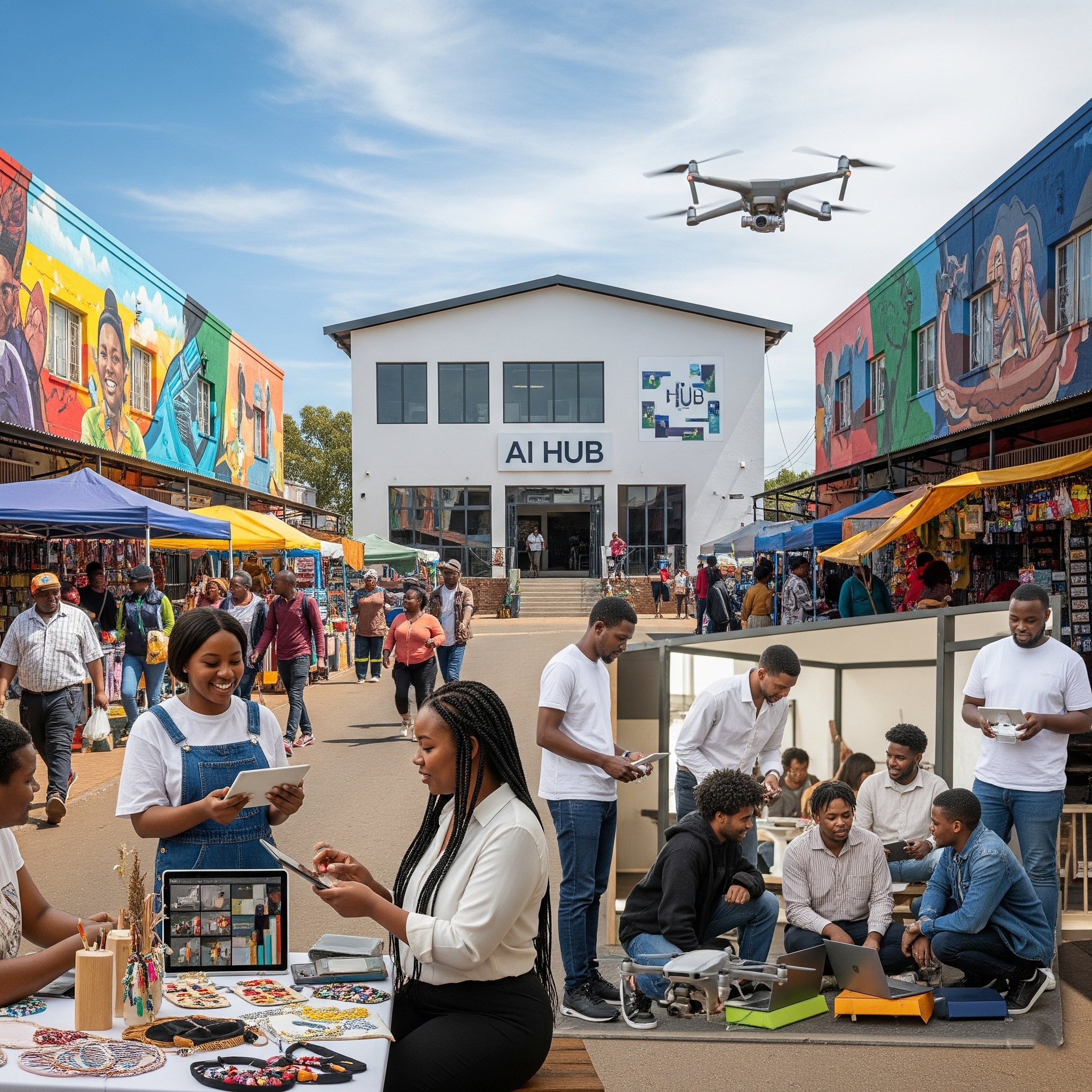
Reflecting on this, I ponder the future of township entrepreneurs, will they rise as global innovators, leveraging AI to address the world's most pressing challenges? Such a vision compels leaders to take decisive action. What would the world look like if township enterprises revolutionised global commerce? The answer depends on the extent to which high-level stakeholders champion AI-powered entrepreneurship with boldness and inclusivity. These leaders must drive investment, collaboration, and innovation with unyielding commitment. I firmly believe that while AI offers the tools for transformation, its impact ultimately depends on the audacity with which we embrace its potential.
Call-to-Action: Be Bold, Invest, Collaborate and Build a Brighter Future with AI-Powered Entrepreneurship
AI-powered entrepreneurship is not merely a technological advancement; it is a movement capable of redefining the socio-economic landscape of township economies. With practical solutions such as AI-driven logistics, education initiatives, and innovation hubs, the pathway to growth becomes tangible and actionable. By embedding AI into the entrepreneurial fabric, township communities can transition from survivalist economies to thriving ecosystems that generate widespread employment and prosperity. The question remains: Are we ready to invest in this vision of an AI-empowered township economy?
The call to action is clear. CEOs, tech billionaires, academics, and policymakers – you have the resources, influence, and capacity to catalyse this movement. Invest in township AI-powered entrepreneurship. Collaborate with local leaders to co-create solutions that resonate deeply with community aspirations. Commit to ethical AI practices that elevate rather than exploit. The time to act is now. Transforming township economies not only reshapes South Africa's socio-economic landscape but also opens pathways to innovation, growth, and global prosperity. Dare to lead boldly, and the ripple effect will resonate across industries and nations.
The journey toward inclusive prosperity begins with decisive action. How will you shape the future? Will you step forward and breathe life into this vision? The opportunity is waiting.
Images by Bandile Ndzishe of Bandzishe Group
About bandile ndzishe

Bandile Ndzishe is the CEO, Founder, and Global Consulting CMO of Bandzishe Group, a premier global consulting firm distinguished for pioneering strategic marketing innovations and driving transformative market solutions worldwide. He holds three business administration degrees: an MBA, a Bachelor of Science in Business Administration, and an Associate of Science in Business Administration.
With over 30 years of hands-on expertise in marketing strategy, Bandile is recognised as a leading authority across the trifecta of Strategic Marketing, Daily Marketing Management, and Digital Marketing. He is also recognised as a prolific growth driver and a seasoned CMO-level marketer.
Bandile has earned a strong reputation for delivering strategic marketing and management services that guarantee measurable business results. His proven ability to drive growth and consistently achieve impactful outcomes has established him as a well-respected figure in the industry.
As an AI-empowered and an AI-powered marketer, I bring two distinct strengths to the table: empowered by AI to achieve my marketing goals more effectively, whilst leveraging AI as a tool to enhance my marketing efforts to deliver the desired growth results. My professional focus resides at the nexus of artificial intelligence and strategic marketing, where I explore the profound and enduring synergy between algorithmic intelligence and market engagement.
Rather than pursuing ephemeral trends, I examine the fundamental tenets of cognitive augmentation within marketing paradigms. I analyse how AI's capacity for predictive analytics, bespoke personalisation, and autonomous optimisation precipitates a transformative evolution in consumer interaction and brand stewardship. By extension, I seek to comprehend the strategic applications of artificial intelligence in empowering human capability and fostering innovation for sustainable societal advancement.
In essence, I explore how AI augments human decision-making and strategic problem-solving in both marketing and other domains of life. This is not merely an interest in technological novelty, but a rigorous investigation into the strategic implications of AI's integration into the contemporary principles of marketing practice and its potential to reshape decision-making frameworks, rearchitect strategic problem-solving paradigms, enhance strategic foresight, and influence outcomes in diverse areas beyond the marketing sphere.