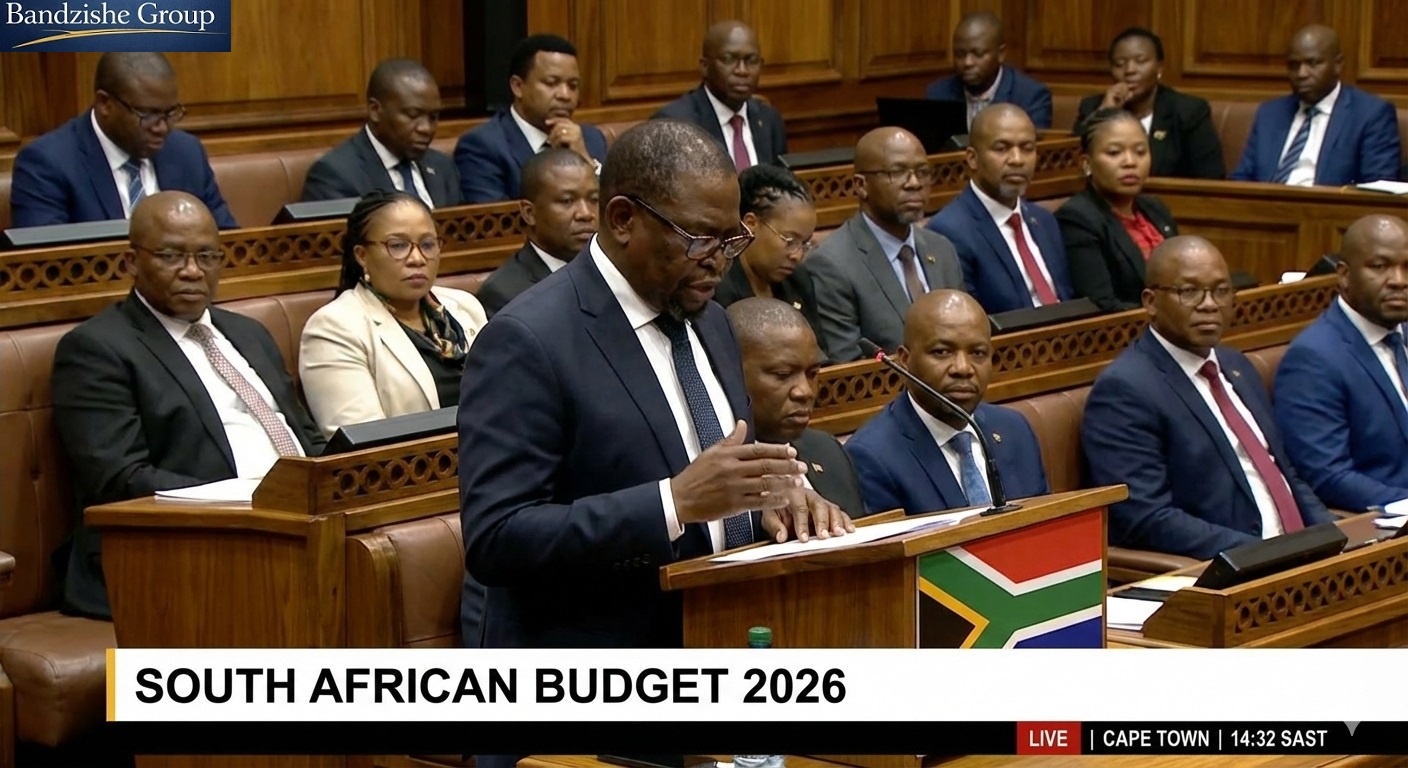

South Africa stands at the threshold of consequence; Budget 2026 will either ignite a decisive era of economic expansion or formally codify a macroeconomic model of managed national decline. This forthcoming fiscal event represents the final opportunity for the South African cabinet to pivot from a trajectory of stagnation toward a paradigm of aggressive industrial expansion. It is a fundamental misconception to view this occasion as a mere accounting exercise; it is, in reality, a high-stakes declaration of national intent that will determine the viability of the Republic within the global competitive hierarchy. South Africa approaches this juncture under conditions that demand intellectual honesty and strategic courage rather than bureaucratic ritual. Growth has weakened over a prolonged period; productivity remains structurally constrained; and social patience is visibly eroding, yet the nation still possesses institutional memory, entrepreneurial talent, and technological potential sufficient to reverse its trajectory if leadership chooses decisiveness over incrementalism.
The central question confronting policymakers, corporate boards, and global investors is stark: Will this Budget serve as a deliberate instrument of national renewal, or will it perpetuate fiscal choreography devoid of structural transformation? Growth is not a peripheral variable; it is the civilisational force that determines social cohesion, geopolitical relevance, technological sovereignty, fiscal durability, and the legitimacy of leadership itself. The international investment community no longer rewards the performance of fiscal prudence if it is divorced from a credible strategy for structural growth. We exist in an era where capital is both sentient and mobile; it migrates to jurisdictions that offer not just stability but the exhilarating promise of technological and industrial ascendancy. Consequently, every fiscal decision taken in the coming weeks will reveal whether South Africa intends to compete vigorously in the twenty-first century or retreat into the defensive management of decline.
Is the South African cabinet truly prepared to abandon the comfort of incrementalism for the rigour of radical economic redesign? The prevailing structural realities of the domestic economy, characterised by calcified labour markets and a shrinking tax base, demand a Budget that functions as a surgical instrument rather than a blunt political tool. There is no longer any intellectual space for the luxury of ideological hesitation or the paralysis of consensus seeking. Prosperity is a deliberate architecture; it requires the courage to dismantle the structures of the past to make room for the infrastructure of the future. The legitimacy of leadership in this century is measured exclusively by the ability to engineer productivity and to secure the economic sovereignty of the people through decisive action. The path forward requires us to summon the intellectual energy necessary to convert potential into enduring prosperity, ensuring that South Africa does not merely survive the current global shifts but dictates its own position within them.
Fiscal Credibility as Strategic Infrastructure for Economic Expansion: Fiscal Discipline Without Real Economic Growth Is Aesthetic Stability
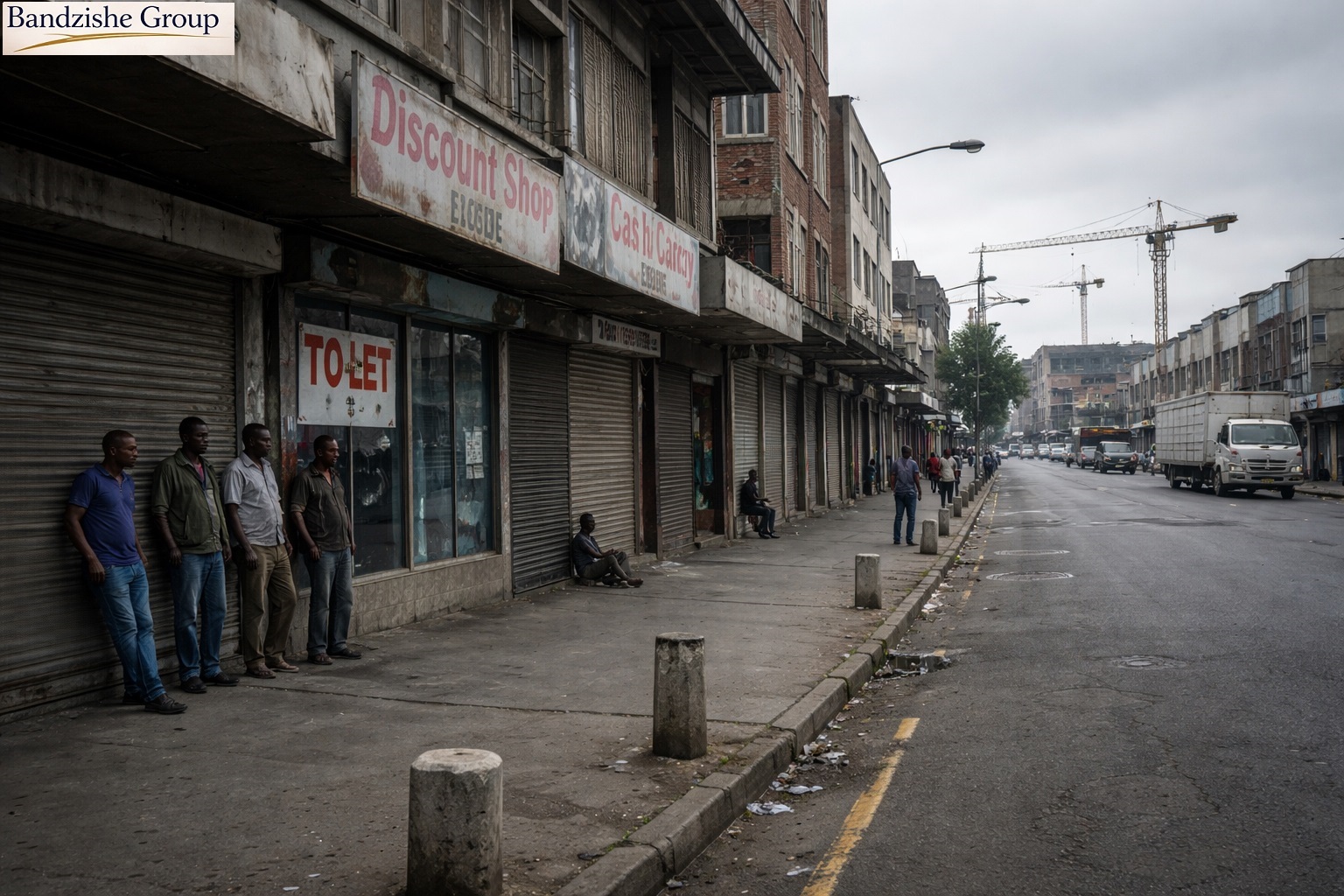
Fiscal credibility remains the non-negotiable foundation upon which the entire edifice of national confidence is constructed; however, discipline devoid of expansionary ambition merely produces the illusion of control. South Africa must acknowledge that fiscal discipline in isolation remains an exercise in futility if it does not serve as a catalyst for economic growth, particularly as the global market has already priced in the standard rhetoric of austerity. Investors, ratings agencies, and multinational enterprises interpret fiscal conduct not solely through deficit metrics but through strategic coherence, policy predictability, and institutional reliability. A Budget that stabilises borrowing costs yet fails to unleash productive enterprise offers only aesthetic stability, not economic vitality. The South African Treasury must therefore recognise that credible fiscal stewardship functions as infrastructure for confidence rather than a final destination. Sound public finances reduce risk premiums, strengthen currency resilience, and attract long-term capital; nevertheless, they become strategically meaningful only when combined with deliberate mechanisms that accelerate investment, scale enterprise, and expand the productive base.
Investors are not seeking a nation that is merely capable of managing its debt; they are seeking a nation that is capable of outgrowing its obligations through sheer economic vitality. If the 2026 Budget fails to provide a clear roadmap for reducing the debt-to-GDP ratio while simultaneously funding growth-oriented initiatives, it will be perceived as a surrender to entropy. Boards and chief executives should interpret Budget signals through this lens, asking whether fiscal restraint is accompanied by decisive structural reform or merely serves as political reassurance devoid of growth architecture.
We must interrogate the orthodoxy that suggests fiscal consolidation and economic expansion are mutually exclusive objectives. The true test of a chief economist is the ability to navigate this apparent paradox by identifying and eliminating the systemic leakages that currently drain the national fiscus. Why should global institutional investors commit capital to a jurisdiction that refuses to prioritise the efficiency of its own spending? The response must be a rigorous commitment to transparency and a relentless focus on the return on investment for every Rand promulgated by the state. Credibility is not a static achievement; it is a dynamic state of being that must be earned through every line item and every policy signal. A failure to establish this baseline of trust will result in a capital flight that no degree of rhetorical flourish can mitigate. This commitment to fiscal integrity must be perceived as a structural shift rather than a temporary corrective measure. In an era of mobile capital, the perception of waste or inefficiency acts as a severe deterrent to the high-level investment required for industrial modernisation. Therefore, the fiscal signal delivered in 2026 must demonstrate an uncompromising dedication to value-creation across the public sector. Strategic problem-solving within the fiscus requires a forward-looking posture that anticipates market requirements and addresses them with surgical precision.
Structural Reform as Economic Liberation: Removing Barriers That Entrench Mediocrity
South Africa does not suffer from a deficit of entrepreneurial spirit; rather, it suffers from institutional friction that punishes ambition and rewards cautious survival. Compliance complexity, fragmented regulation, and policy thresholds that discourage expansion have collectively engineered a climate in which firms hesitate to grow beyond a defensive scale. Budget 2026 must therefore function as an instrument of liberation rather than mere administrative maintenance. The simplification of tax structures, the rationalisation of licensing regimes, and the elimination of redundant compliance layers would signal to domestic innovators and foreign investors that the nation intends to prioritise productivity over procedural ritual. Consequently, this strategic reform would not merely enhance profitability, but would fundamentally reshape behaviour by encouraging firms to hire, invest, digitise, and compete internationally.
The true fiscal signal of the 2026 Budget will be found in its approach to structural reform, specifically regarding the removal of the regulatory friction that stifles the scaling of enterprises. For too long, the South African economy has been hamstrung by a legislative environment that prioritises compliance over creativity and protectionism over productivity. We must ask whether the state possesses the intellectual courage to deregulate the sectors most capable of generating mass employment and technological innovation. The current barriers to entry for emerging firms are not merely bureaucratic nuisances; they are existential threats to the long-term health of the national economy. We require a Budget that incentivises the transition from a consumption-based economy to a production-based powerhouse.
Global corporations evaluating market entry require absolute clarity and predictability, while local enterprises require relief from regulatory labyrinths that consume managerial energy without generating productive output. Consider the Vietnamese manufacturing sector, which underwent a radical transformation by aligning fiscal incentives with the requirements of global supply chains. South Africa must emulate this clarity of purpose by creating special economic zones that are truly autonomous and geared toward high-tech exports. If we do not empower the entrepreneur to take risks and build institutions, we are effectively subsidising our own obsolescence. The 2026 Budget must be an instrument of liberation for the productive classes; for any failure to address these structural fractures will ensure the economy remains a spectator in the global race for industrial relevance.
Disposable Income and Participation as Strategic Imperatives: Households as Engines of National Resilience

Economic discourse often treats households as passive recipients of policy; however, such thinking betrays a profound misunderstanding of the active and moving forces that propel an economy forward. Rather than viewing an economy as a static map, one must perceive it as a series of constant interactions, such as how a household decision to save or spend directly alters how a factory chooses to produce goods. Working people and pensioners constitute the economic nervous system through which productivity gains translate into social stability, yet they are frequently overlooked in mainstream growth narratives. Budget 2026 must therefore elevate labour market participation, skills mobility, and real income expansion as central pillars rather than peripheral concerns. The expansion of disposable income and the broadening of economic participation are not merely social imperatives; they are the essential drivers of domestic demand and fiscal sustainability. Boards and policymakers alike must understand that disposable income is not merely a welfare consideration, as it functions as the oxygen sustaining demand, innovation adoption, and entrepreneurial risk-taking. Policies that incentivise workforce entry, reward productivity, and expand training pipelines into technology-intensive sectors will generate compound benefits: increased consumption, enhanced tax revenue, and strengthened societal cohesion. Ultimately, a failure to expand the circle of participation will inevitably lead to social volatility, which remains the ultimate enemy of business confidence and institutional stability.
We must confront the uncomfortable reality that current labour dynamics in South Africa are designed for a bygone era of industrialisation, and as such, a nation that sidelines a significant portion of its human capital is actively sabotaging its own future. The 2026 Budget must propose a radical redesign of the incentives surrounding workforce inclusion, moving beyond the stagnation of social grants toward the dignity of productive employment. Can we justify a fiscal framework that fails to equip the youth with the cognitive and technological tools required for the fourth industrial revolution? We should look to the example of Estonia, where a national commitment to digital literacy and human capital development turned a resource-poor nation into a global hub for innovation. South Africa must invest in the reskilling of its people with the same intensity that it invests in physical infrastructure, recognising that cognitive assets are as vital as concrete ones. Furthermore, pensioners require protection against inflationary erosion and access to digital financial inclusion that enables continued economic participation within this modern landscape. The inclusion of pensioners and the working class into a more robust financial ecosystem will provide the necessary buffer against global economic shocks. We are at a point where the cost of exclusion is far higher than the cost of investment in our collective human potential; therefore, the state must lead with the strategic audacity required for this transformation.
The Geometry of Business Confidence and Capital Allocation: Predictability as the Currency of Investment

Capital is neither sentimental nor patient; rather, it flows towards environments where strategic direction appears credible, predictable, and enduring. Business confidence functions as the invisible infrastructure that determines the rate of capital allocation and the audacity of entrepreneurial risk-taking across the sovereign landscape. Budget 2026 must therefore communicate more than mere fiscal arithmetic, as it must articulate a coherent economic narrative that reassures investors of both continuity and ambition. When the state provides ambiguous signals or erratic policy shifts, it creates a vacuum of uncertainty that is rapidly filled by caution, capital preservation, and defensive stagnation. Regulatory stability, transparent incentive structures, and clear industrial priorities will encourage corporations to allocate capital toward expansion rather than the perpetual deferral of investment. Multinational enterprises require absolute assurances that policy reversals will not undermine long-term planning or compromise the sanctity of capital commitments. The 2026 Budget must provide a level of policy predictability that allows the C-suite to plan for a decade rather than just the next fiscal quarter. Only through such strategic clarity can we expect the private sector to transition from a posture of cautious survival to one of aggressive, value-creating expansion.
The South African cabinet must adopt a mindset of collaboration, recognising that the growth of the private sector is the only sustainable source of tax revenue and national prosperity. We must demand a fiscal environment where the rules of engagement are clear, consistent, and oriented toward the long-term prosperity of the enterprise rather than political exigency. Why should a global CEO prioritise South African expansion if the fiscal goalposts are constantly being moved by short-term electoral requirements? We can observe the success of the Singaporean model, where the state functions as a strategic partner to business, ensuring that energy security and logistics efficiency remain top-level priorities. South African conglomerates should be incentivised to invest in advanced manufacturing, digital services, and export-oriented value chains with the same intensity seen in more competitive jurisdictions. Corporate leaders must also recognise their reciprocal responsibility, as investment in research, workforce development, and innovation ecosystems should not be delayed pending perfect policy conditions. Strategic courage from both state and enterprise will determine whether business confidence becomes a virtuous cycle or remains a perpetually deferred aspiration. If the Budget fails to inspire the leaders of industry to deploy their cash reserves, it will have failed in its primary mission to stimulate the national economy.
Productivity Engineering and Technological Sovereignty: The Frontier of Industrial Modernisation and Artificial Intelligence as the Architecture of Competitiveness

Productivity represents the decisive frontier upon which South Africa’s future competitiveness will be determined, necessitating that Budget 2026 confront the technological revolution with unapologetic ambition. We are currently witnessing a global divergence between nations that lead in innovation and those that merely consume the innovations of others; therefore, it is an act of strategic negligence to ignore the role of artificial intelligence in enhancing systemic output. Incentives for artificial intelligence adoption, digital infrastructure expansion, and advanced skills development will enable enterprises to transcend labour-intensive stagnation and enter productivity-driven growth trajectories. Strategic marketing capability, data analytics, and intelligent automation should be treated as national competitiveness tools rather than discretionary corporate luxuries. How can we expect our industries to remain competitive if they are operating on the digital equivalent of an analogue framework in a hyper-connected global market? The government must collaborate with universities, research institutes, and private sector innovators to create innovation corridors that accelerate the commercialisation of emerging technologies. Global corporations operating in South Africa should be encouraged to establish regional research hubs, transferring knowledge while cultivating local talent pipelines to ensure domestic relevance. Such initiatives would not merely enhance efficiency; they would reposition the nation within global value chains, signalling technological seriousness to investors and geopolitical partners alike.
The 2026 Budget must serve as the launching pad for the technological transformation of the South African industrial base, focusing specifically on the integration of cutting-edge digital infrastructure. The state must provide targeted fiscal incentives for corporations that invest in research and development and the adoption of transformative technologies to ensure long-term viability. We should implement a system of productivity credits that rewards firms for achieving measurable gains in output through technological integration, mirroring the models that propelled South Korea to the forefront of global electronics. South Africa possesses the creative talent and the entrepreneurial spirit to lead the continent in this digital renaissance, provided the fiscal policy is sufficiently supportive and visionary. If we do not seize this moment to modernise our economy, we risk becoming a digital colony in a world where data is increasingly defined as the primary sovereign asset. The future architecture of work is being designed today, and the 2026 Budget must ensure that South Africa is one of the primary architects of this new industrial order. Prosperity in the twenty-first century is not an accident of geography or resources; it is a deliberate consequence of choosing technological ascendancy over industrial inertia. By aligning fiscal policy with the requirements of the fourth industrial revolution, the Republic can finally convert its latent potential into a sustained reality of economic leadership.
Governance Excellence and Institutional Resilience: Restoring Trust Through Executional Discipline
No fiscal blueprint can succeed without credible institutions capable of disciplined execution; for the most sophisticated strategies remain inert if they lack a robust administrative vehicle. Historically, corruption, bureaucratic inertia, and fragmented governance structures have collectively diluted policy impact and severely undermined investor confidence in the sovereign state. Budget 2026 must therefore incorporate specific mechanisms that strengthen procurement transparency, accelerate executive decision-making, and enforce unyielding accountability across all public agencies. Institutional resilience requires the immediate integration of data-driven monitoring systems and independent evaluation frameworks to ensure that progress is measurable rather than merely rhetorical. We must transition toward a leadership culture that rewards tangible competence rather than a stagnant compliance with outdated and inefficient hierarchies. Strategic reform at this level serves to dismantle the bottlenecks that have traditionally impeded the flow of capital and the implementation of structural projects. Ultimately, the legitimacy of the national fiscal signal is entirely dependent upon the perceived integrity of the bodies tasked with its administration. A commitment to institutional excellence is therefore not a peripheral administrative goal but a central pillar of national economic resurgence.
Trust functions as primary economic capital; without it, even the most sophisticated fiscal strategies inevitably collapse under the weight of market scepticism and social volatility. Boards of major corporations must complement these public sector reforms by enhancing their own internal governance standards and prioritising ethical leadership across the enterprise. By embracing transparency as a competitive advantage rather than a regulatory burden, the private sector can signal its readiness to partner with a revitalised state. This bilateral commitment to integrity creates a synergistic environment where policy predictability and ethical conduct reinforce one another to attract long-term global capital. We must recognise that the global competitive hierarchy is increasingly defined by the reliability of a nation’s legal and institutional infrastructure. If the 2026 Budget fails to secure this foundation of trust, the resulting capital flight will be swift and impossible to mitigate through rhetorical flourish alone. The cost of institutional failure is the permanent loss of opportunity and the erosion of the social contract that binds the nation together. Therefore, the architectural integrity of our governance structures must be treated with the same strategic urgency as the fiscal arithmetic of the fiscus itself.
The Consequences of Strategic Failure: Decline as a Choice Rather Than a Destiny
A Budget that chooses the path of least resistance by prioritising short-term political optics over long-term structural growth is a Budget that invites national catastrophe. If Budget 2026 adopts this trajectory, the consequences will be swift, unforgiving, and systemic. We must be clear about the specific manifestations of failure; they include the erosion of the middle class, the collapse of municipal services, and the permanent loss of international competitiveness. A nation that cannot grow faster than its population is a nation that is in a state of terminal decline. Can the leadership of this country afford to ignore the warning signs that are currently flashing across the economic dashboard? Investment will retreat; innovation ecosystems will stagnate; and social tensions will intensify as economic opportunity narrows.
Fiscal consolidation without expansion will inevitably erode public services through declining revenue, while business leaders will increasingly deploy capital elsewhere in search of predictable growth environments. International partners will interpret such hesitation as strategic drift, diminishing South Africa’s influence within regional and global forums. The 2026 Budget is not an opportunity for rhetorical appeasement; it is an opportunity for a decisive break from the failures of the past. If the state continues to prioritise the consumption of wealth over its creation, the result will be a fiscal crisis that will dwarf any previous challenges. We have seen the trajectory of nations that failed to adapt to the changing global landscape; they are cautionary tales of lost decades and shattered social contracts.
Such outcomes are not inevitable; they are the predictable result of incrementalism disguised as prudence. The role of the economic architect is to see the danger before it arrives and to build the defences necessary to withstand the storm. Policymakers and corporate leaders must therefore confront a fundamental truth: decline emerges not from external conspiracy but from internal reluctance to embrace transformative change. This is a constructive warning, intended to shock the system into a state of heightened awareness and urgent action. There is no middle ground; we either choose the path of disciplined growth or we accept the consequences of our own hesitation.
The Growth Doctrine for National Renewal: Designing A Future Worth Leading
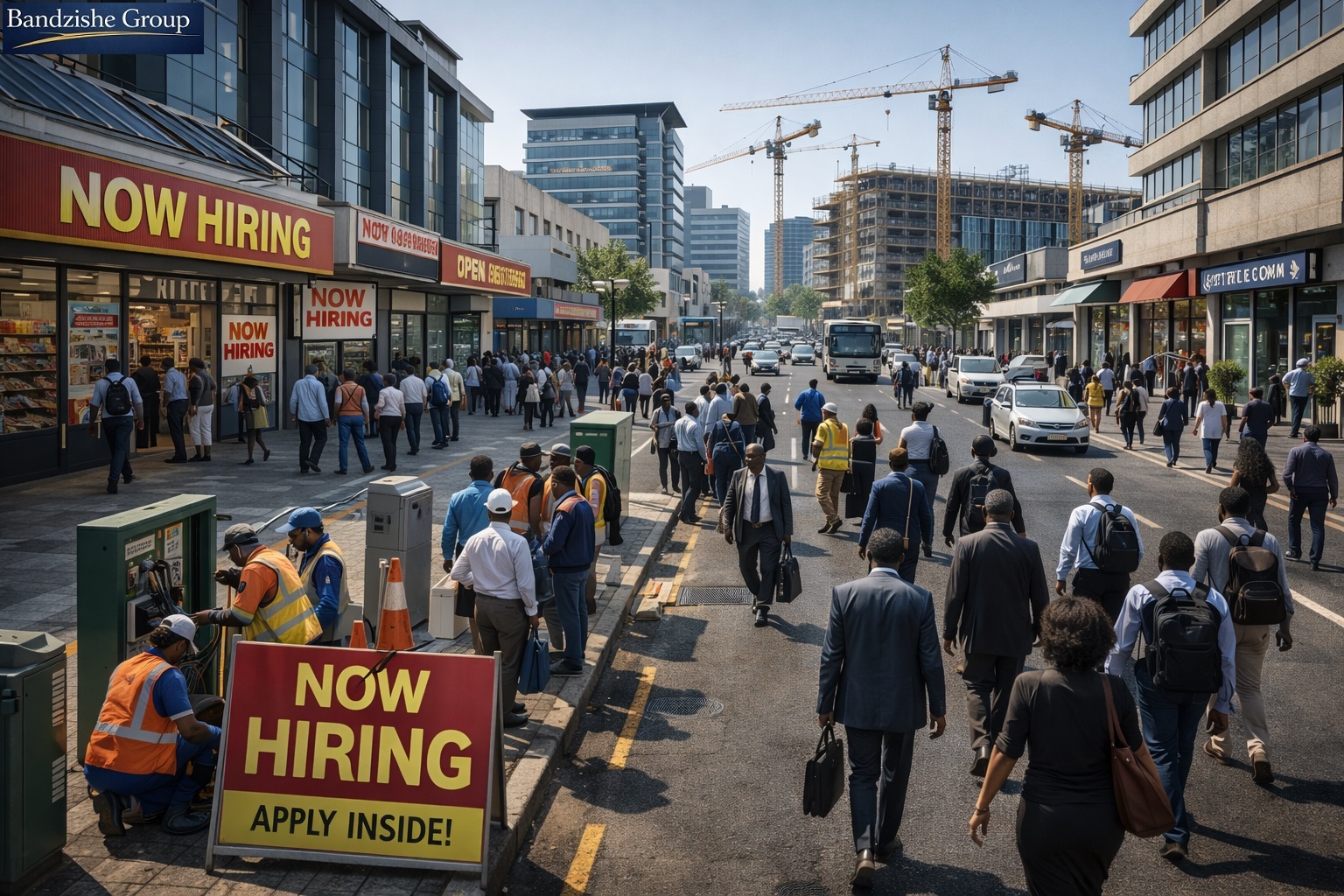
South Africa stands at a defining juncture where deliberate design can replace hesitant improvisation. Consequently, the South African Budget 2026 must be the document that finally enshrines the growth doctrine as the supreme national strategic imperative. We must synthesise fiscal credibility, relentless structural reform, technological transformation, and institutional excellence into a single, unified vision for the future of the Republic. This represents the only mechanism through which to restore the legitimacy of our institutions and to secure a prosperous future for all our citizens. The stakes transcend fiscal spreadsheets and parliamentary debates; for economic growth represents the mechanism through which dignity, stability, and national ambition become tangible realities.
To the global leaders, the CEOs, and the policy shapers reading this, the message is clear: the time for intellectual timidity has passed. Policymakers, executives, and citizens alike must approach this Budget not as an annual ritual but as a generational test of leadership. We must advance into the complexity of our challenges with a level of precision and vision that compels the world to take notice. Specifically, policymakers should adopt a comprehensive agenda that includes regulatory simplification, innovation incentives, workforce reskilling, and infrastructure modernisation aligned with digital competitiveness. Simultaneously, corporate leaders must reciprocate through bold investment, strategic collaboration with academia, and the integration of artificial intelligence into enterprise operations.
Global investors should recognise that decisive reform would unlock a market characterised by demographic dynamism, entrepreneurial energy, and strategic geographic positioning. South Africa possesses the talent, resources, and strategic location required for resurgence; yet the decisive question remains whether its leaders will summon the intellectual courage, strategic clarity, and executional discipline necessary to convert potential into enduring prosperity. Nations and institutions either architect their future with courage or surrender it through hesitation; Budget 2026 will reveal which path South Africa chooses. The world’s most influential boards, investors, and policymakers will observe closely, as the choices made now will echo through labour markets, innovation ecosystems, and geopolitical alliances for generations. If you are prepared to lead with the intellectual energy and the strategic audacity required for this transformation, the nation is prepared to be your partner in success. Let the decisions made in this Budget be those that reflect our courage rather than our fears.
Images by Bandile Ndzishe of Bandzishe Group
About bandile ndzishe

Bandile Ndzishe is the CEO, Founder, and Global Consulting CMO of Bandzishe Group, a premier global consulting firm distinguished for pioneering strategic marketing innovations and driving transformative market solutions worldwide. He holds three business administration degrees: an MBA, a Bachelor of Science in Business Administration, and an Associate of Science in Business Administration.
With over 30 years of hands-on expertise in marketing strategy, Bandile is recognised as a leading authority across the trifecta of Strategic Marketing, Daily Marketing Management, and Digital Marketing. He is also recognised as a prolific growth driver and a seasoned CMO-level marketer.
Bandile has earned a strong reputation for delivering strategic marketing and management services that guarantee measurable business results. His proven ability to drive growth and consistently achieve impactful outcomes has established him as a well-respected figure in the industry.
As an AI-empowered and an AI-powered marketer, I bring two distinct strengths to the table: empowered by AI to achieve my marketing goals more effectively, whilst leveraging AI as a tool to enhance my marketing efforts to deliver the desired growth results. My professional focus resides at the nexus of artificial intelligence and strategic marketing, where I explore the profound and enduring synergy between algorithmic intelligence and market engagement.
Rather than pursuing ephemeral trends, I examine the fundamental tenets of cognitive augmentation within marketing paradigms. I analyse how AI's capacity for predictive analytics, bespoke personalisation, and autonomous optimisation precipitates a transformative evolution in consumer interaction and brand stewardship. By extension, I seek to comprehend the strategic applications of artificial intelligence in empowering human capability and fostering innovation for sustainable societal advancement.
In essence, I explore how AI augments human decision-making and strategic problem-solving in both marketing and other domains of life. This is not merely an interest in technological novelty, but a rigorous investigation into the strategic implications of AI's integration into the contemporary principles of marketing practice and its potential to reshape decision-making frameworks, rearchitect strategic problem-solving paradigms, enhance strategic foresight, and influence outcomes in diverse areas beyond the marketing sphere.